KERETSI ©AKrDSC05148

Keretsi Workbook

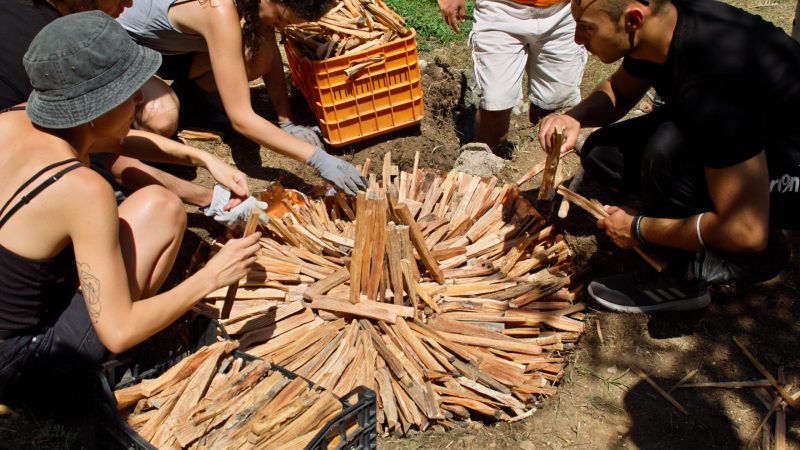
This Notebook of Works is a documentation of the works and the results of the dual educational programme “Keretsi | Apprenticeship and Workshop on Mortars for Traditional and Sustainable Building Practices” which was implemented at the beginning of October until November 2025 in Frasta, Tzoumerka, Greece, at the School for Research and Education on Traditional and  Sustainable Building, where Boulouki is based.

The document is available in Greek.
 

Date: 13 March 2026

Rel. project: KERETSI TZOUMERKA SCHOOL

See also...

This study examines the traditional technology of pine tar kilns in Greece, focusing on the case of Distrato in Epirus, where the last traditional artisans reside. Pine tar (katrami) is a viscous liquid produced by the destructive distillation of resinous wood, primarily from pine trees. This practice has a long history globally and in the Mediterranean, with applications in medicine, cosmetics, fuels, and waterproofing for construction and shipbuilding.

Authors: Christos Theocharis, Ioanna Doutsis, Panos Kostoulas, Grigoris Koutropoulos

The file is available in French.

This article presents preliminary findings from an extensive research project titled ‘Burning the Bones of the Earth’, which began in 2021. It documents the technology of traditional lime kilns in the trans-border region between Albania and Greece.

Authors: Ioanna Ntoutsi, Faidon Moudopoulos-Athanasiou.

The file is available in English.

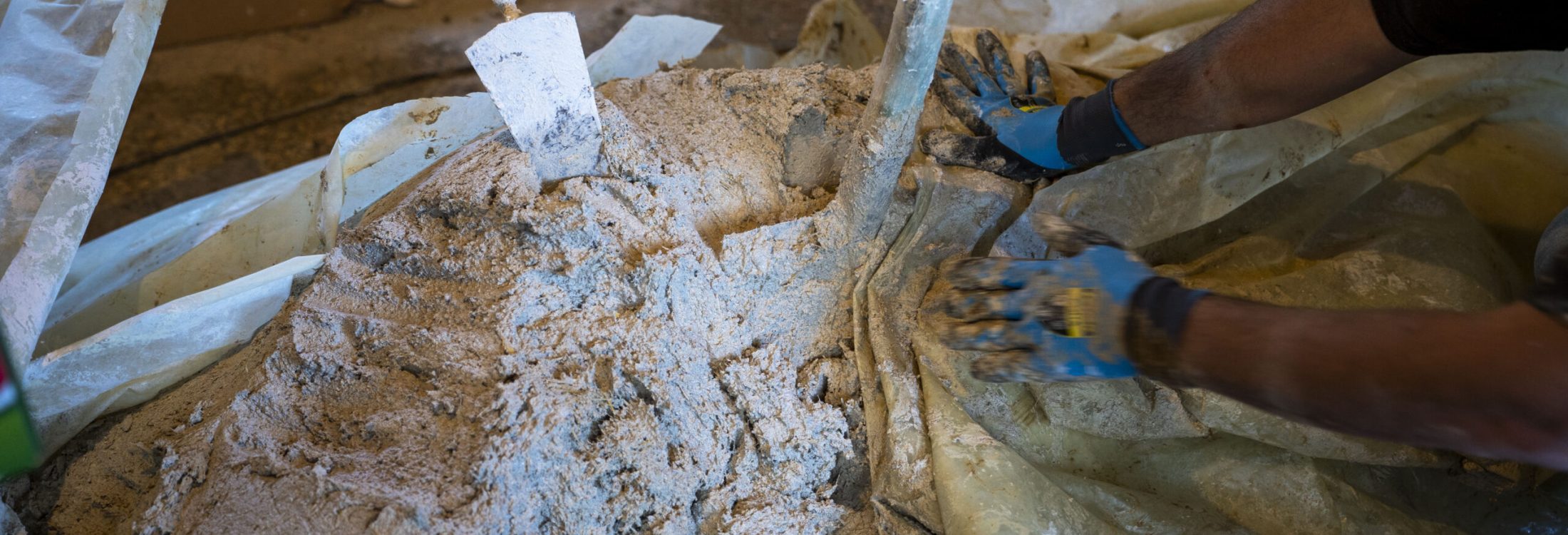
This handbook documents a methodology for renovating interior plastering systems on stone masonry using low-impact lime- and clay-based materials enhanced with vegetable fibers. In this regard, it illustrates how a plastering system with enhanced thermal properties can be employed to modestly enhance the energy efficiency of a historic structure without compromising its architectural features. These interventions rely on local, natural materials and techniques based on traditional knowledge and the principles of reuse and recycling.

The research and implementation of the works was part of the project  KERETSI.

The creation of the handbook was supported by the INTBAU Grassroots Grants Programme.
Privacy Overview

This website uses cookies so that we can provide you with the best user experience possible. Cookie information is stored in your browser and performs functions such as recognising you when you return to our website and helping our team to understand which sections of the website you find most interesting and useful.