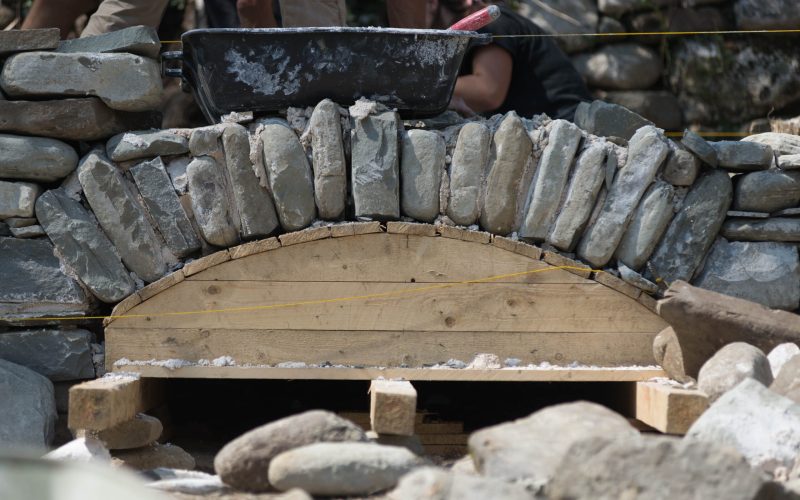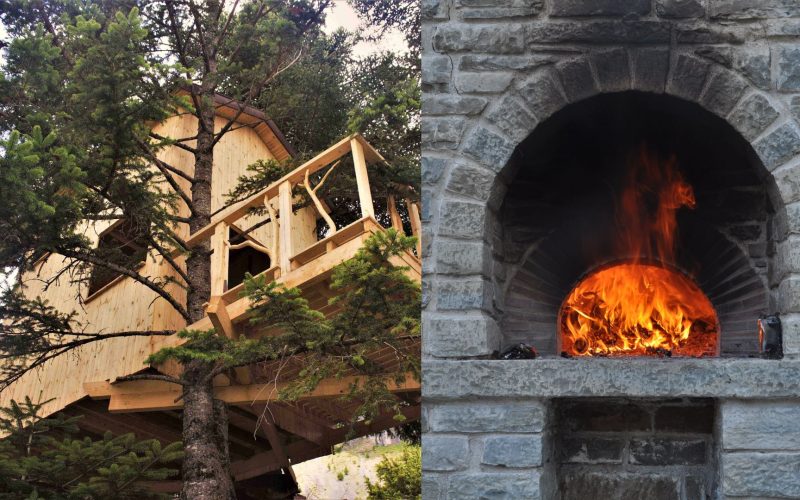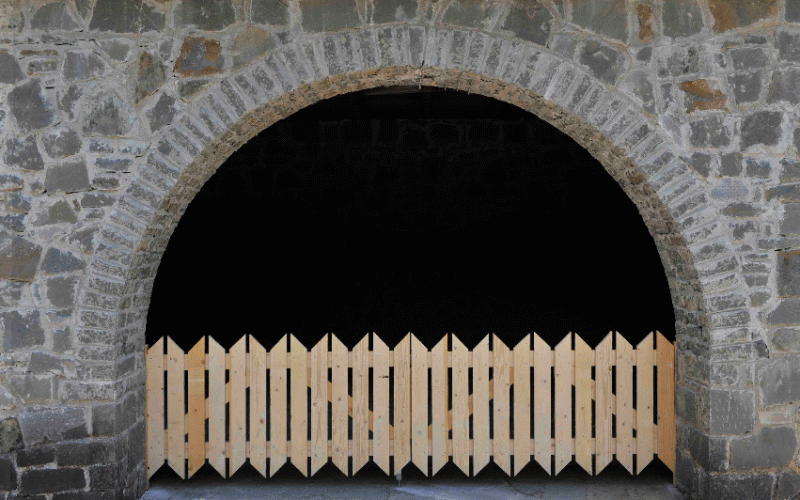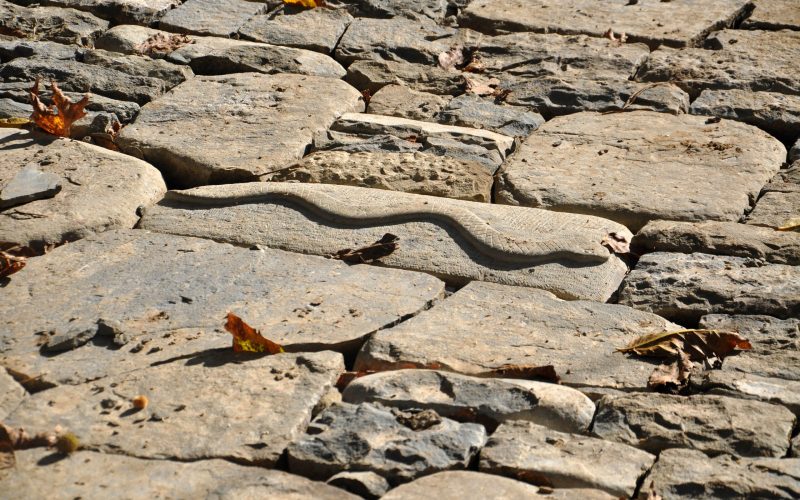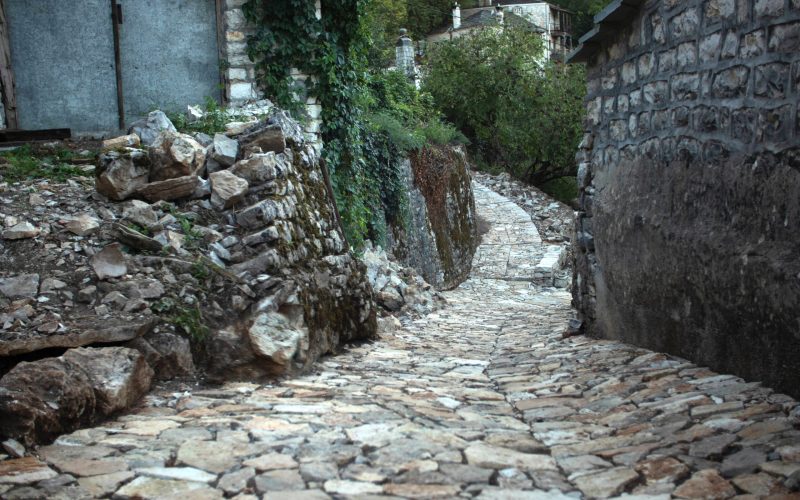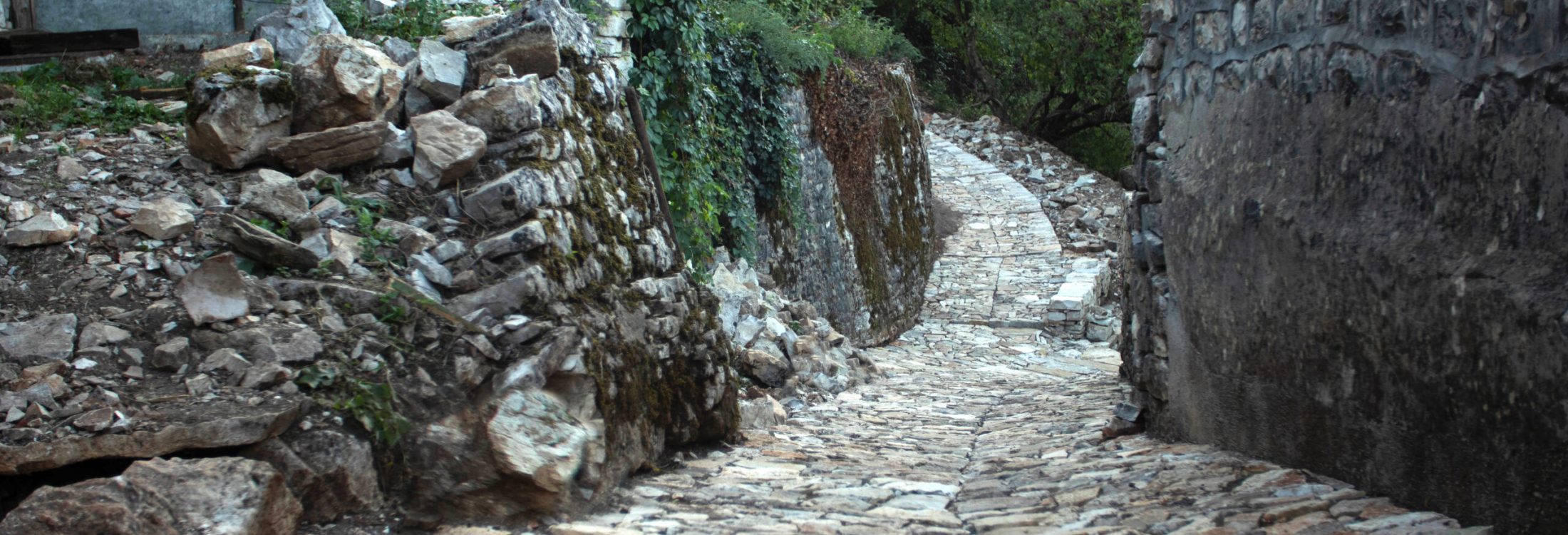
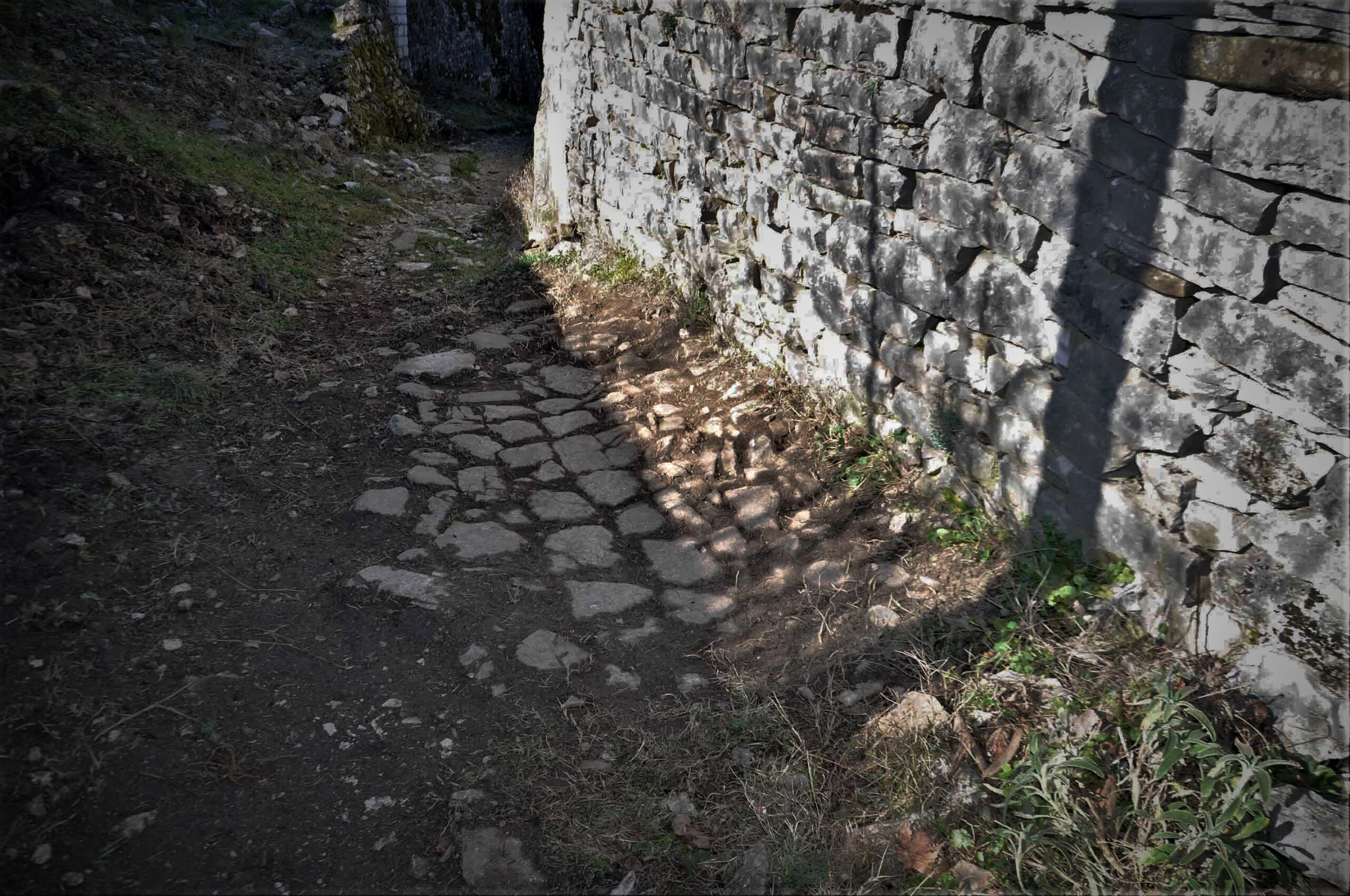
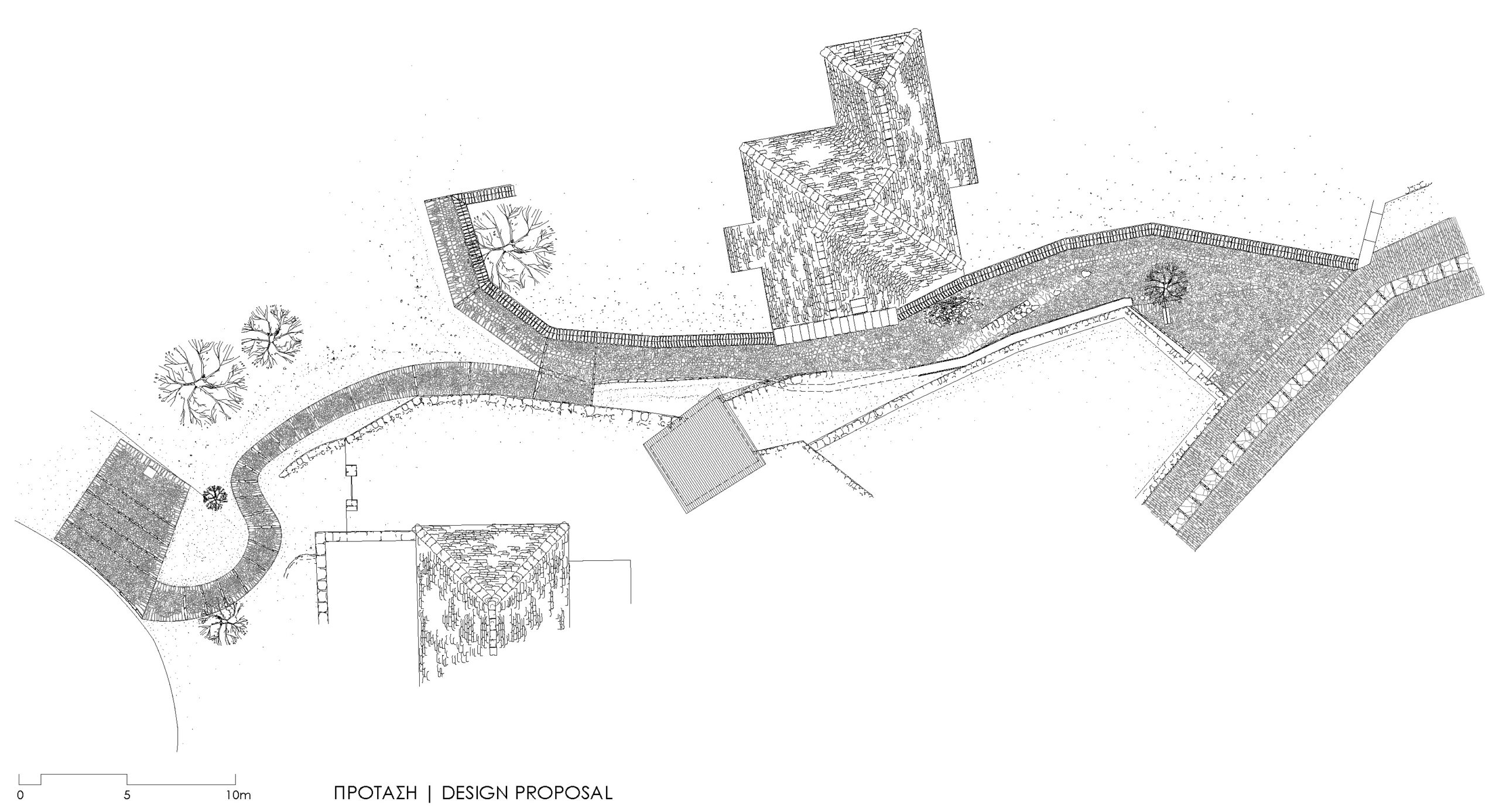
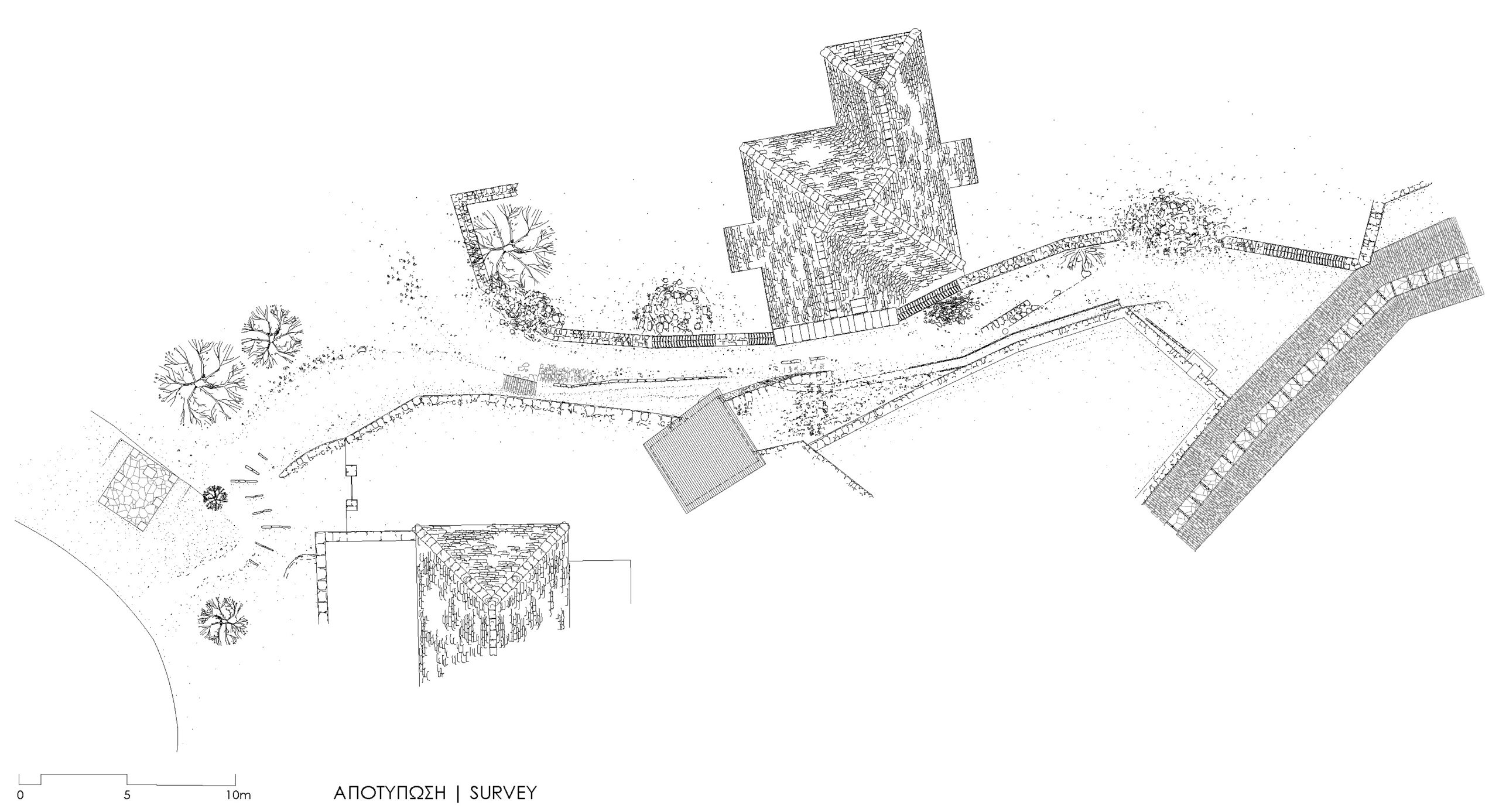
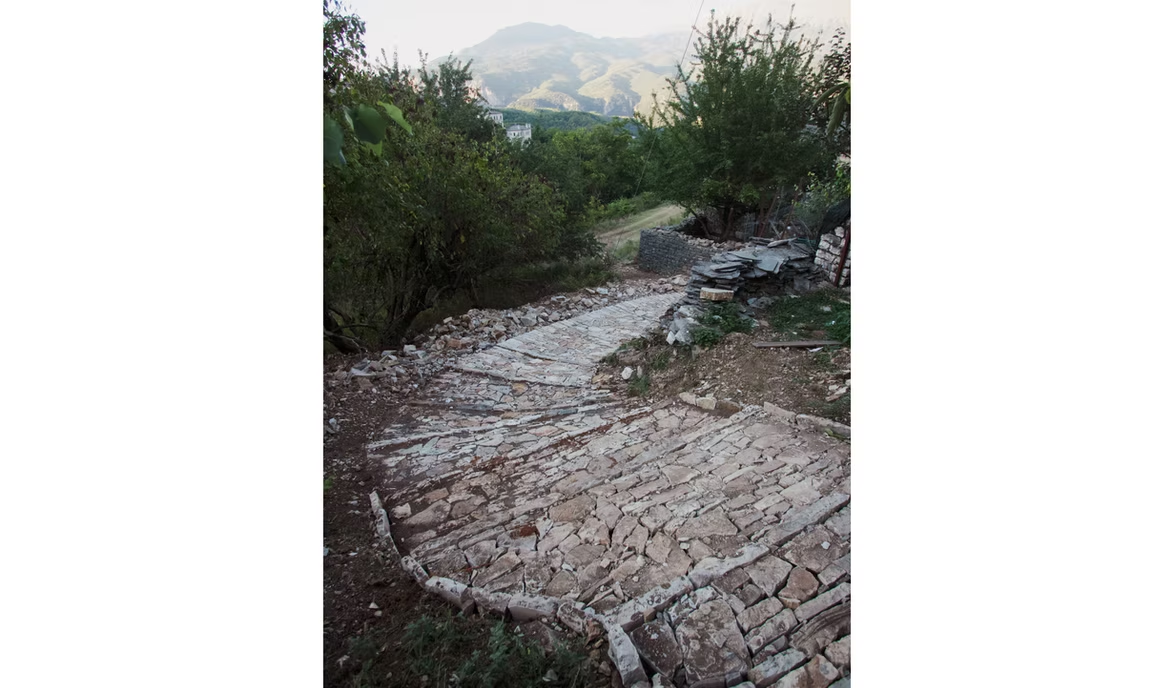
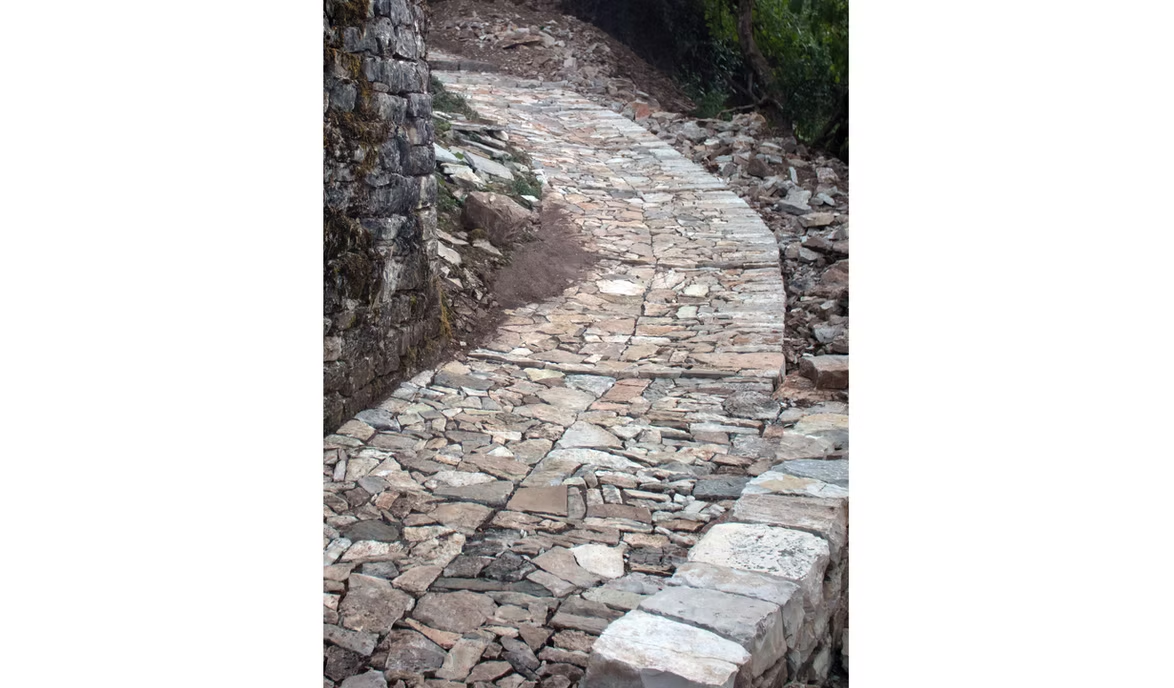
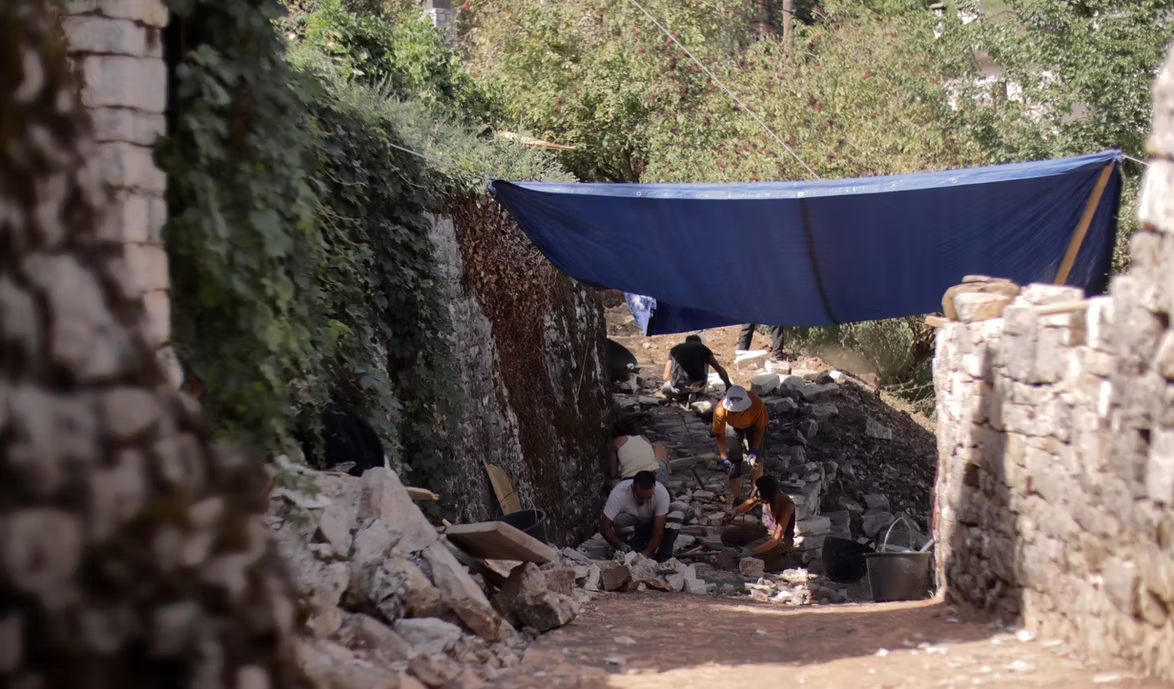
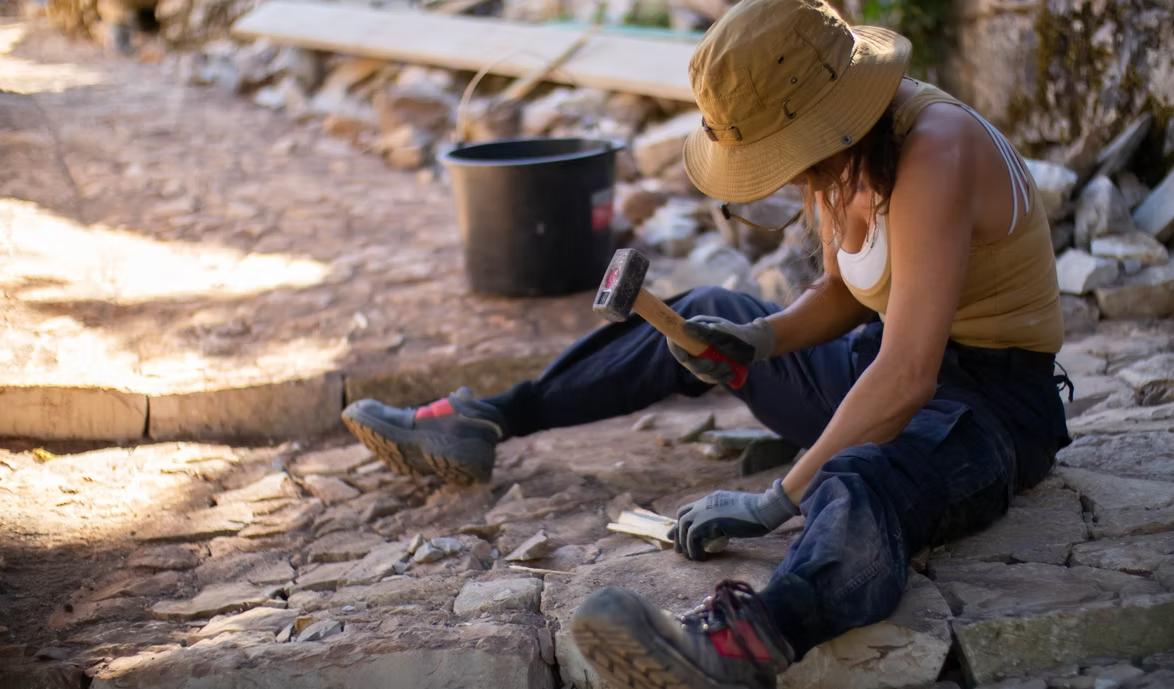
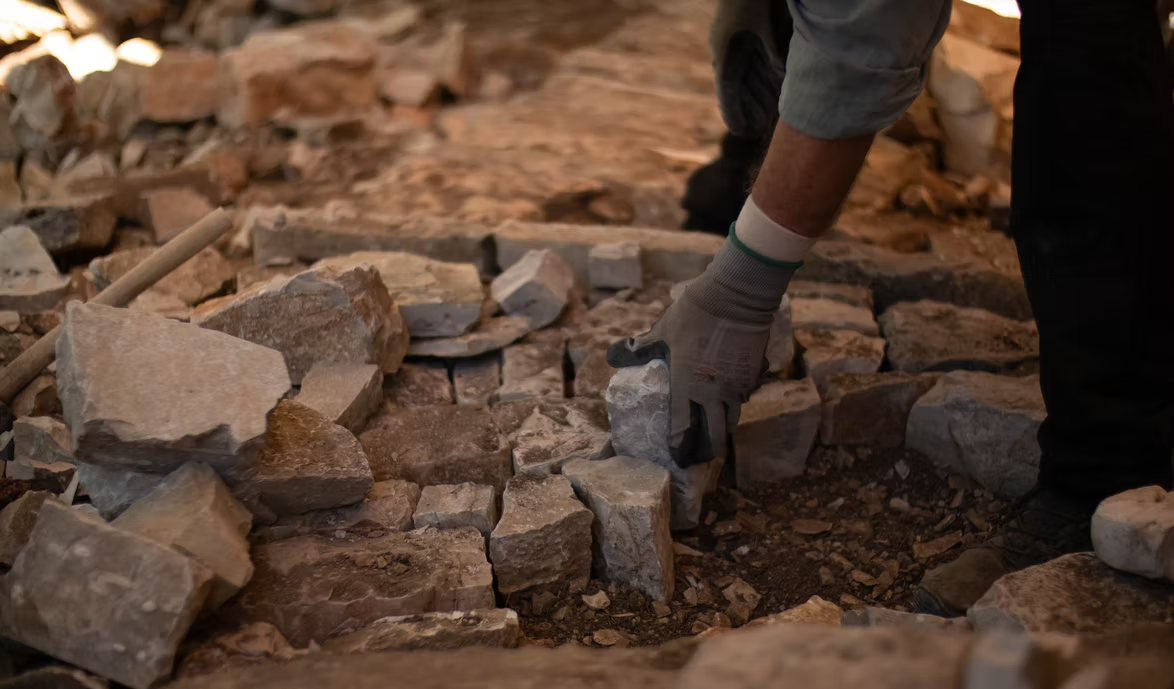
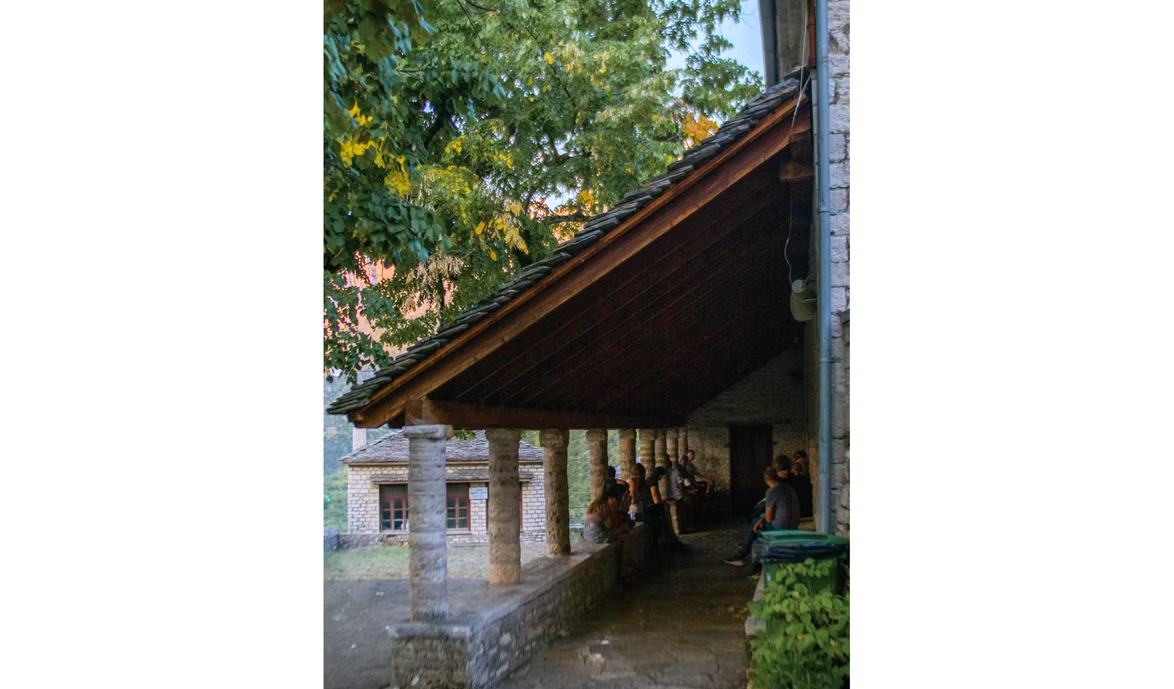
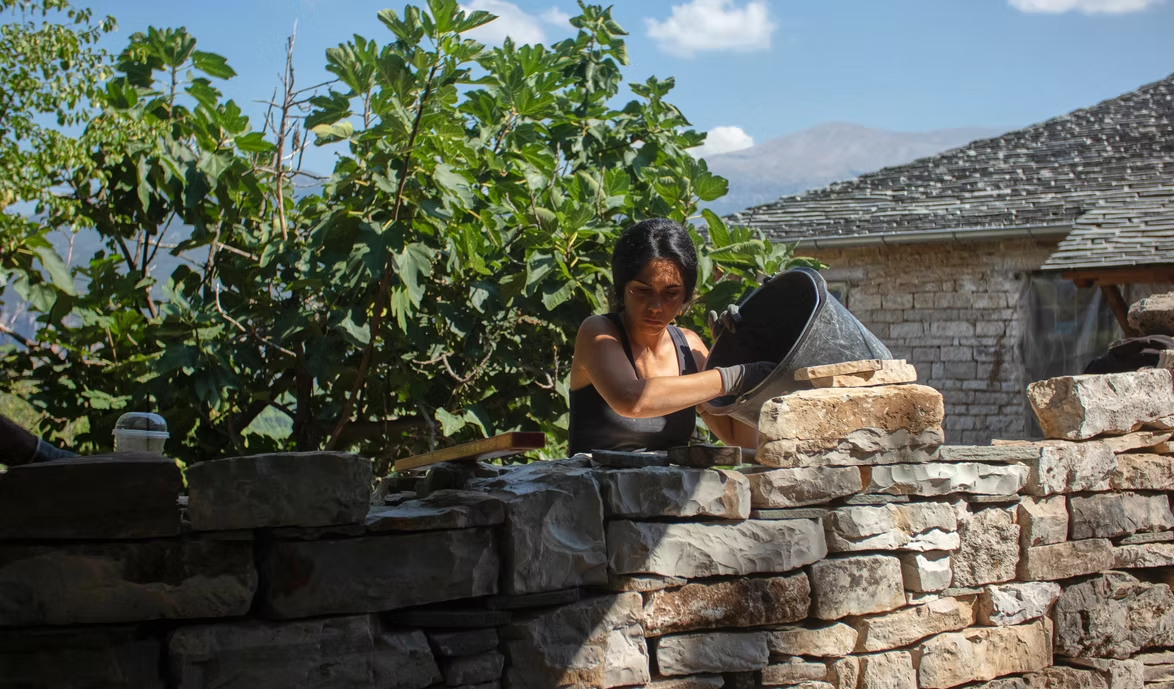
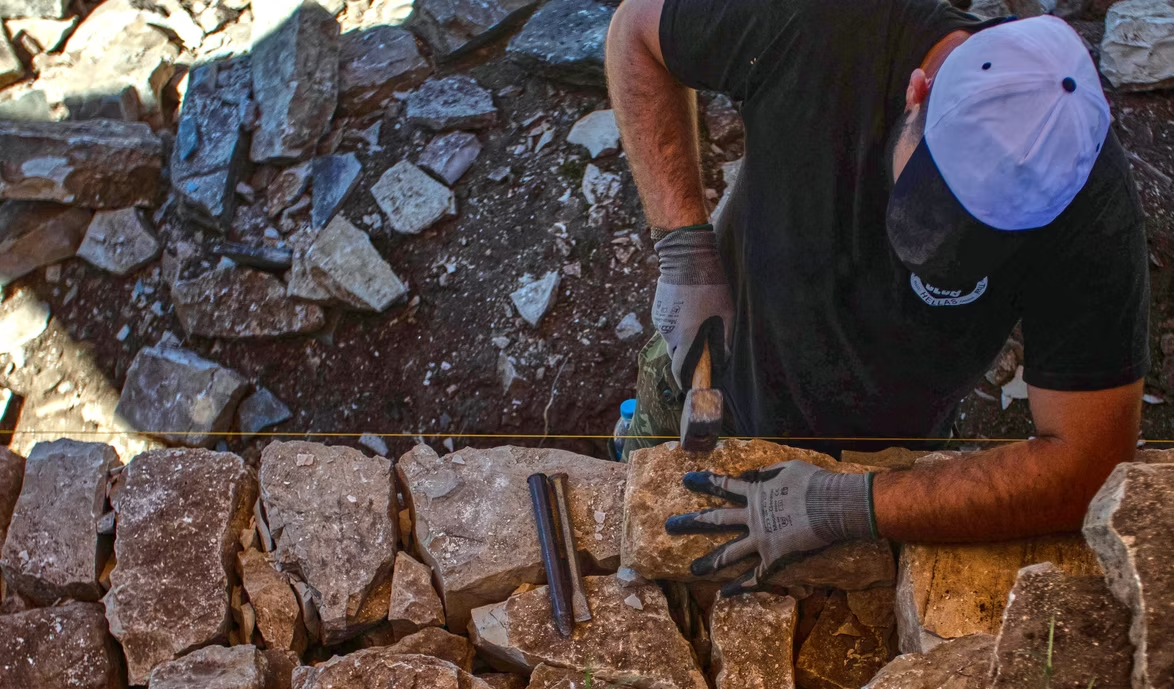
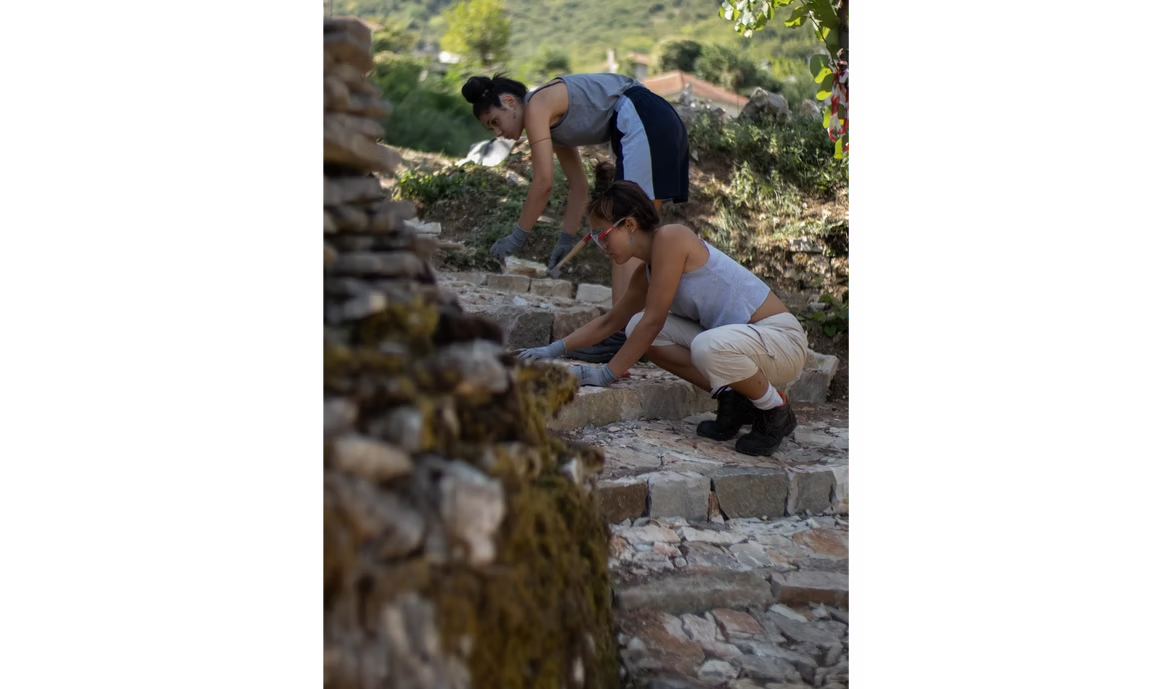
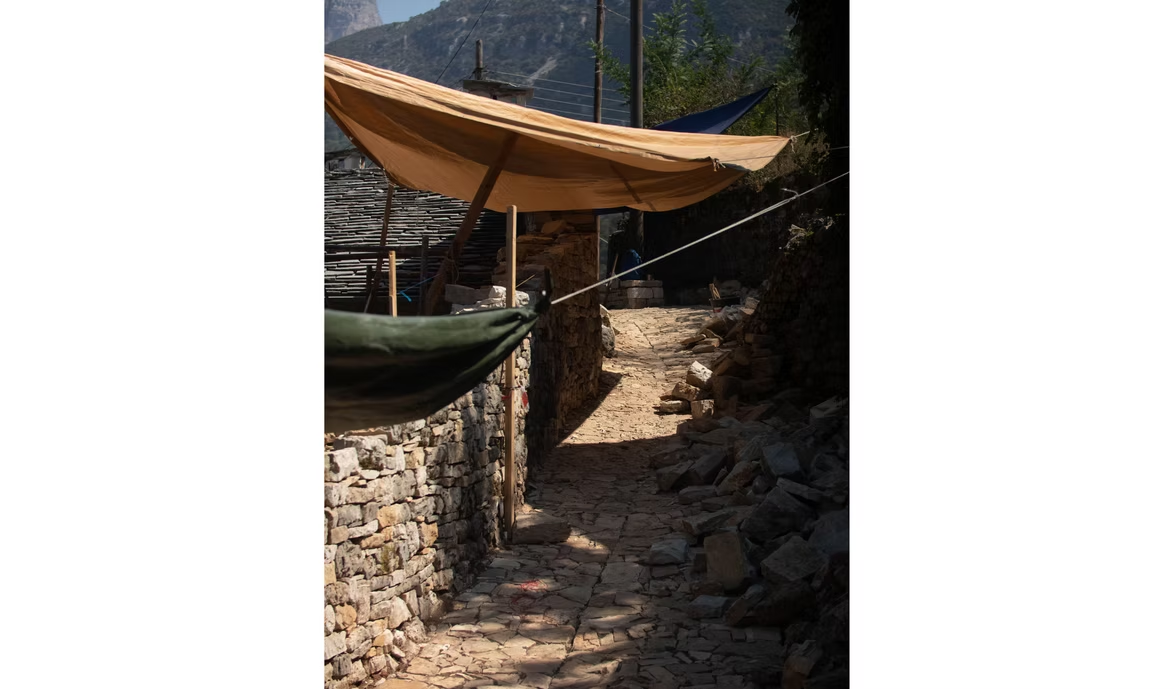
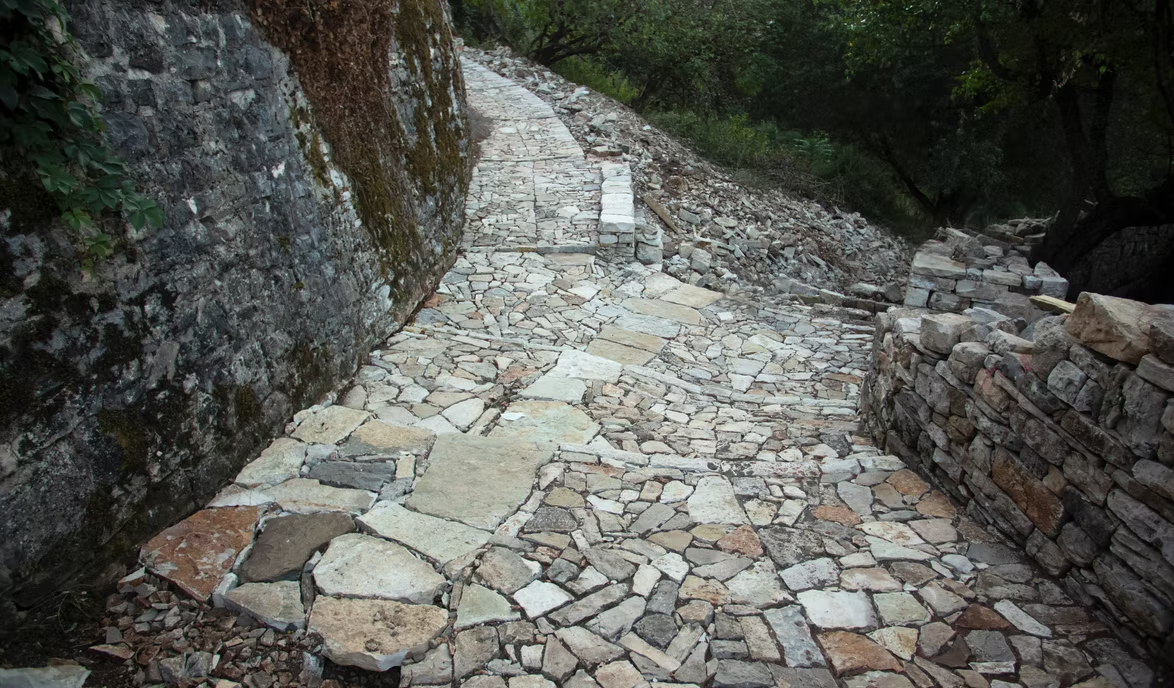
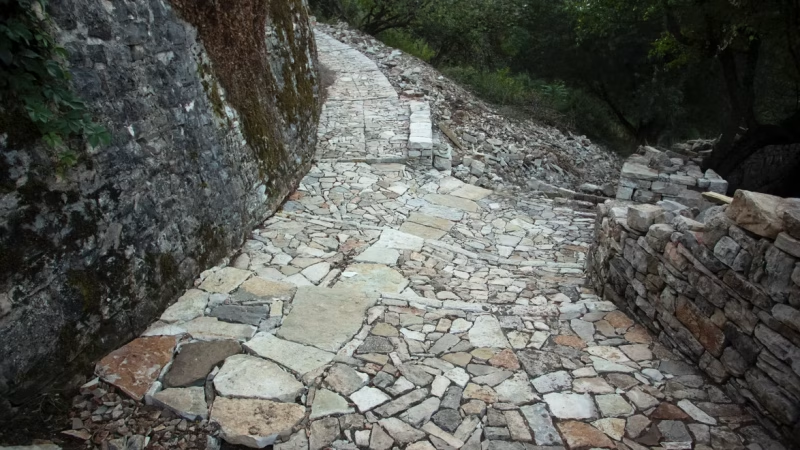
‘Reappearances’ project was a combination of a practical workshop and a participatory restoration of an old cobbled pathway, an important part of Aristi’s ‘kalderimi’ network, in the Zagori region. The main goal of the workshop was to involve the local community in the appreciation and management of its own cultural landscape and public space. Through this process, we traced the potential of a cultural heritage management model based on active civil engagement. Placing the focus on local stakeholders, the program was targeted at the people of Aristi: those who permanently reside in the village, as well as those who originate from Aristi and the broader area of Zagori, but live in different places around Greece and abroad. Three young local apprentices and twenty volunteers worked under the guidance of four experienced stonemasons for four weeks in order to construct a 60m long pathway, around 65m² of dry stone walls, along with a small public fountain. In the course of the restoration project, local collective memories of the historical use of the pathway were rejuvenated.
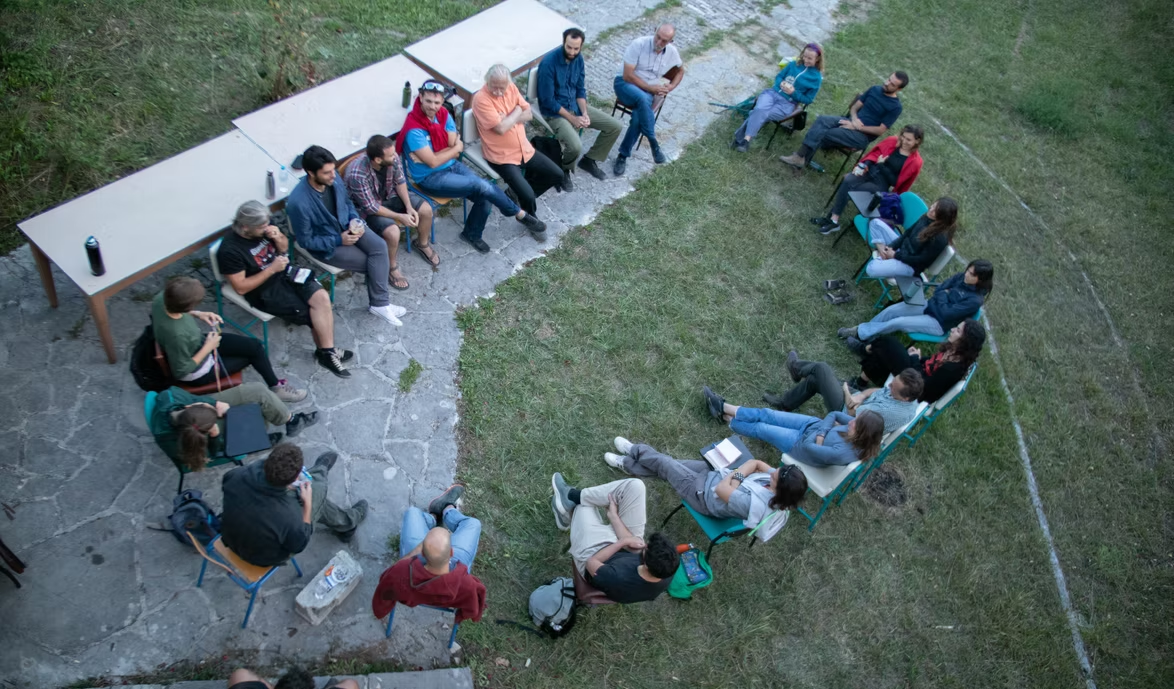
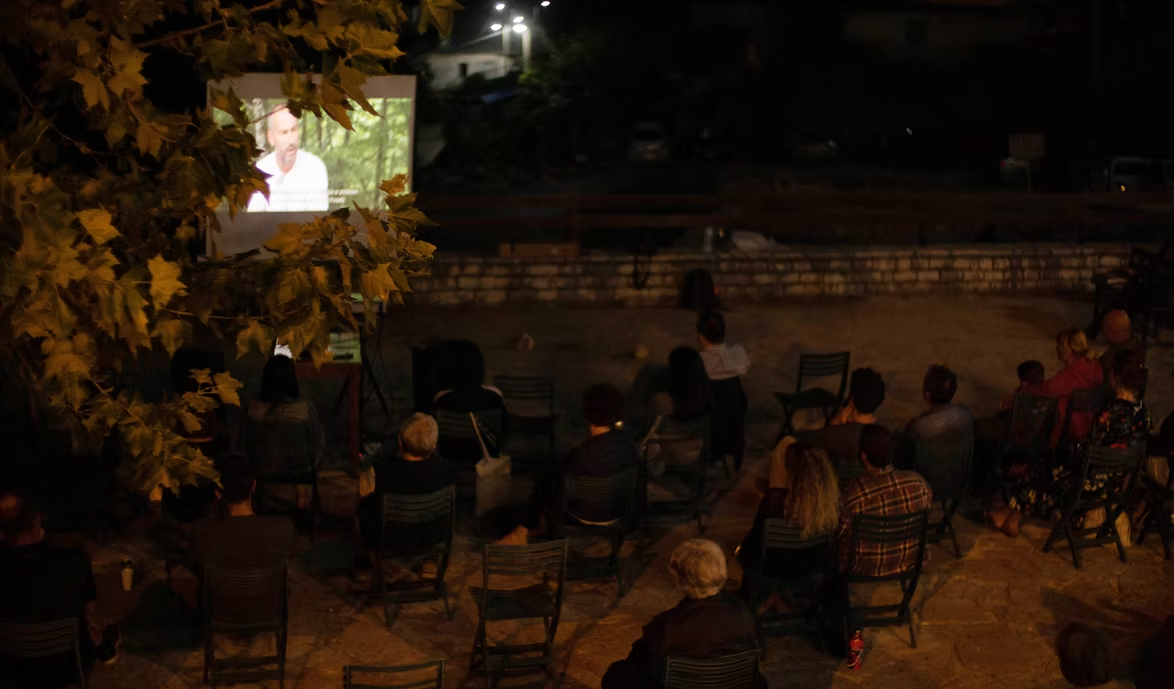
Another crucial part of the project was the one-day symposium on the cultural landscapes and the art of drystone knowledge, during which two round-table discussions were hosted; the first one regarding the use of local materials in the cultural landscapes and the second one regarding the legal framework of drystone craftsmanship. Representatives from academic and respected institutional bodies – including the Ministry of Culture – but also masons and local authorities, participated in the discussions, which concluded with issuing two decrees of multilateral understanding. The project was also framed with parallel activities, such as hiking along Voidomatis in the UNESCO global geopark of Vikos – Aoos, a cultural walk at the historic place where the Grambala Battle took place, a visit to the sacred forest of Ayia Paraskevi, and documentary screenings.
The Reappearances workshop was implemented by Boulouki | Traveling Workshop on Traditional Building Techniques, in collaboration with the Youth Association of Aristi, during August–September 2020. The project was held under the auspices of the Directorate of Modern Cultural Heritage of the Ministry of Culture and the Hellenic National Commission for UNESCO. The documentary was funded by Boulouki and the Ioannis Saralis Foundation, through the Greek Ministry of Culture, and supported by the research program “UnderTheForest” (HORIZON-MSCA-2023-PF-01-01-101155232), funded by the European Union.