Report on Open Events and Construction Works of the “Keretsi” Programme
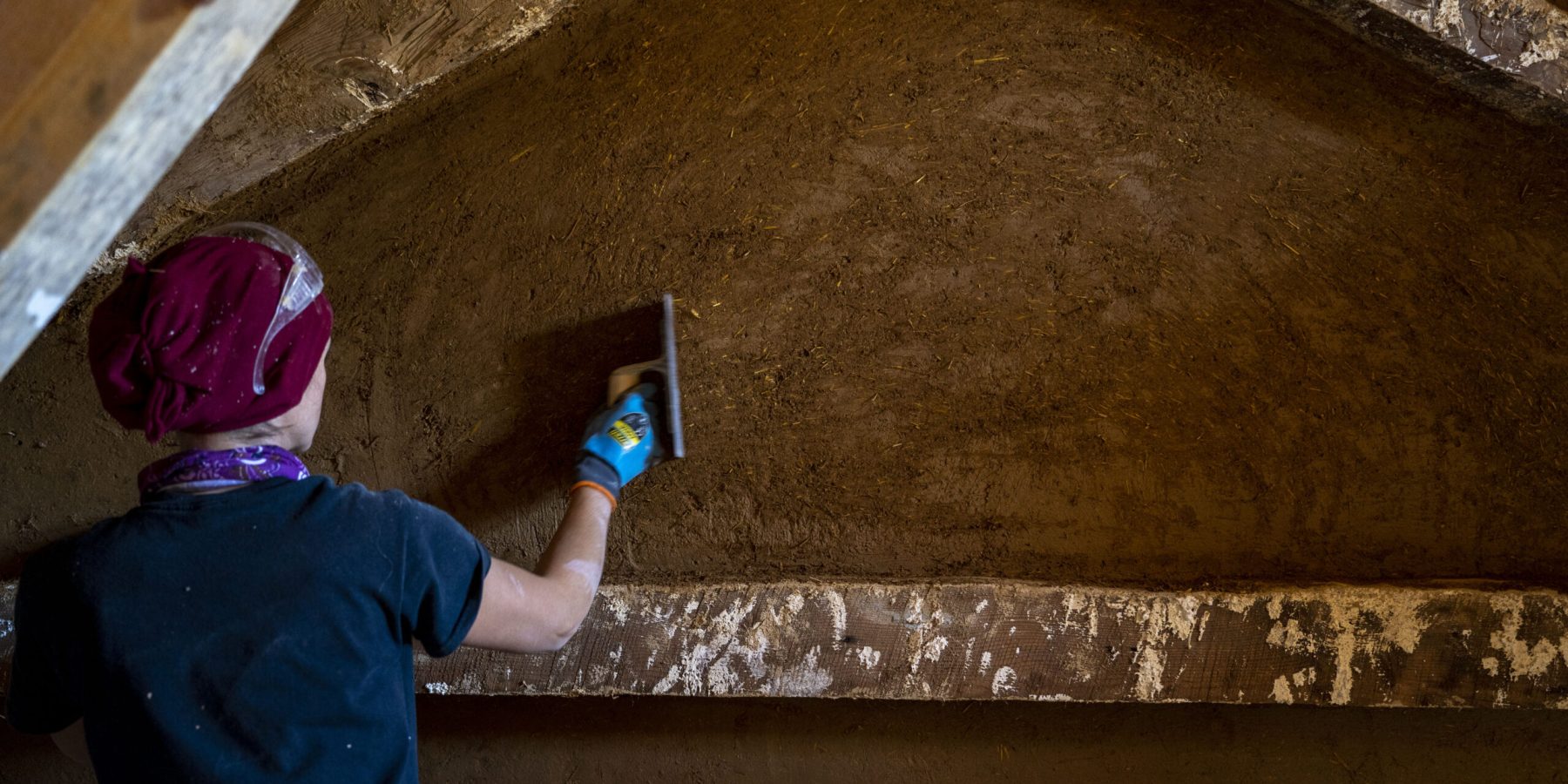
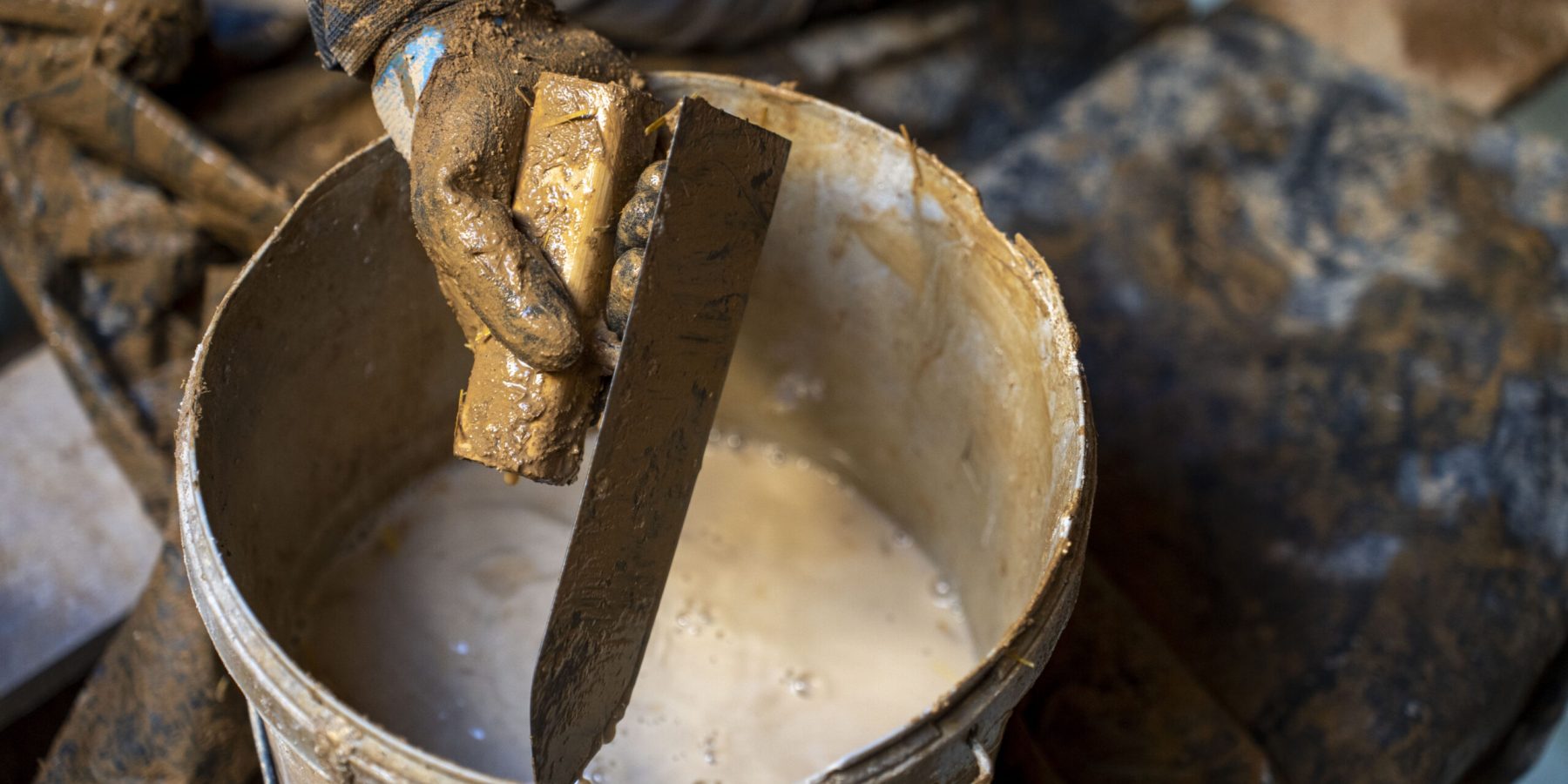
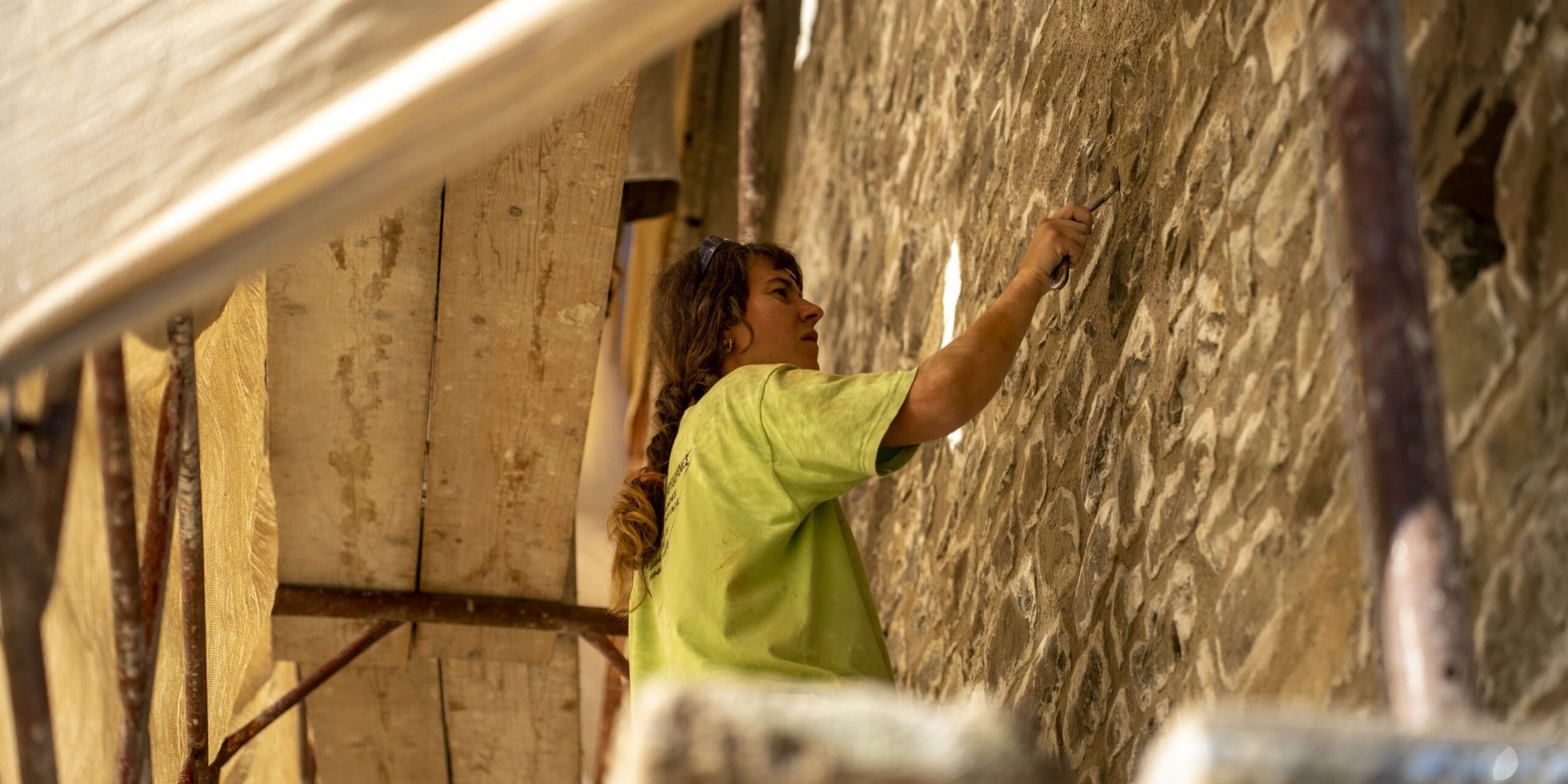
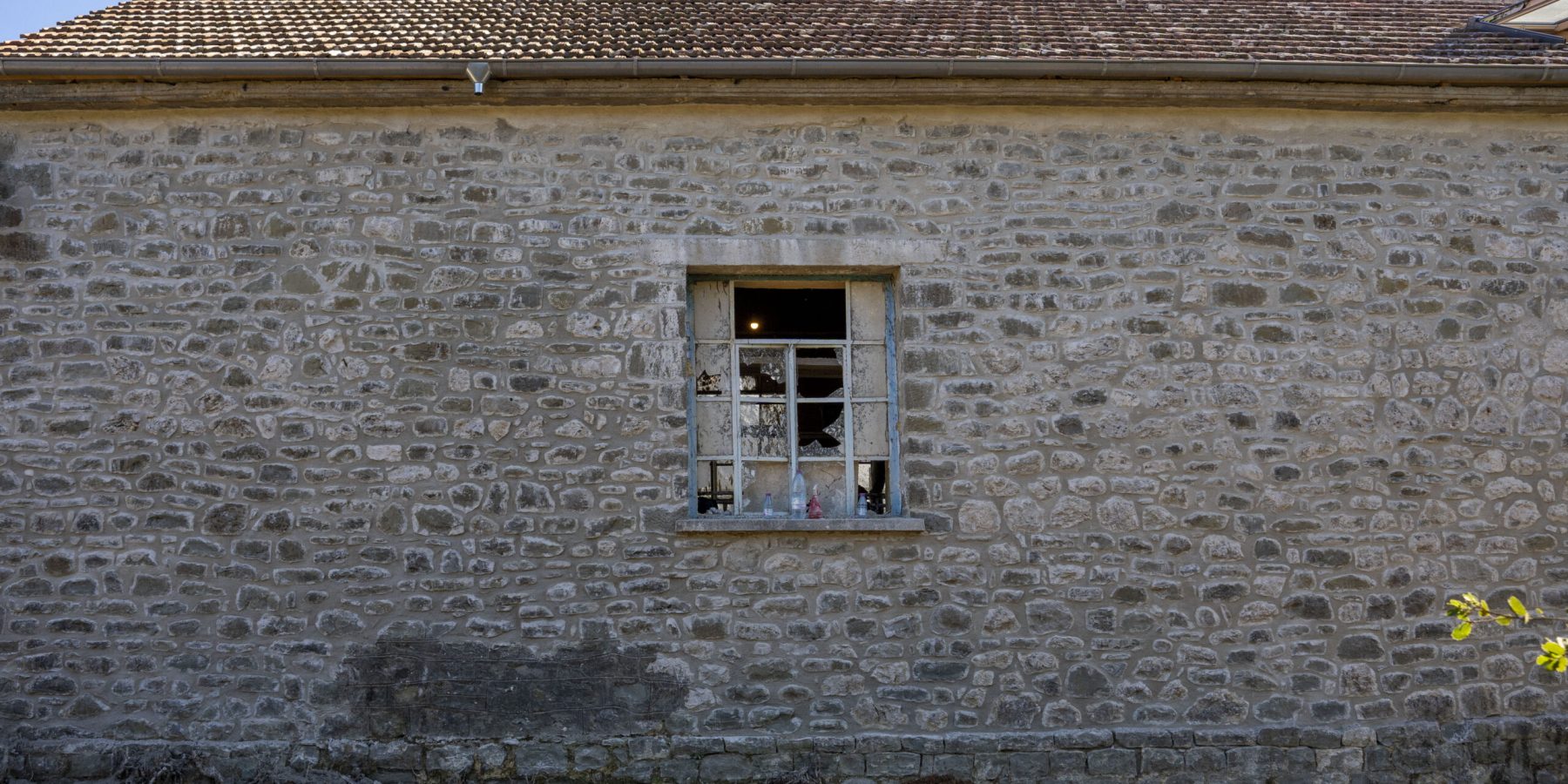
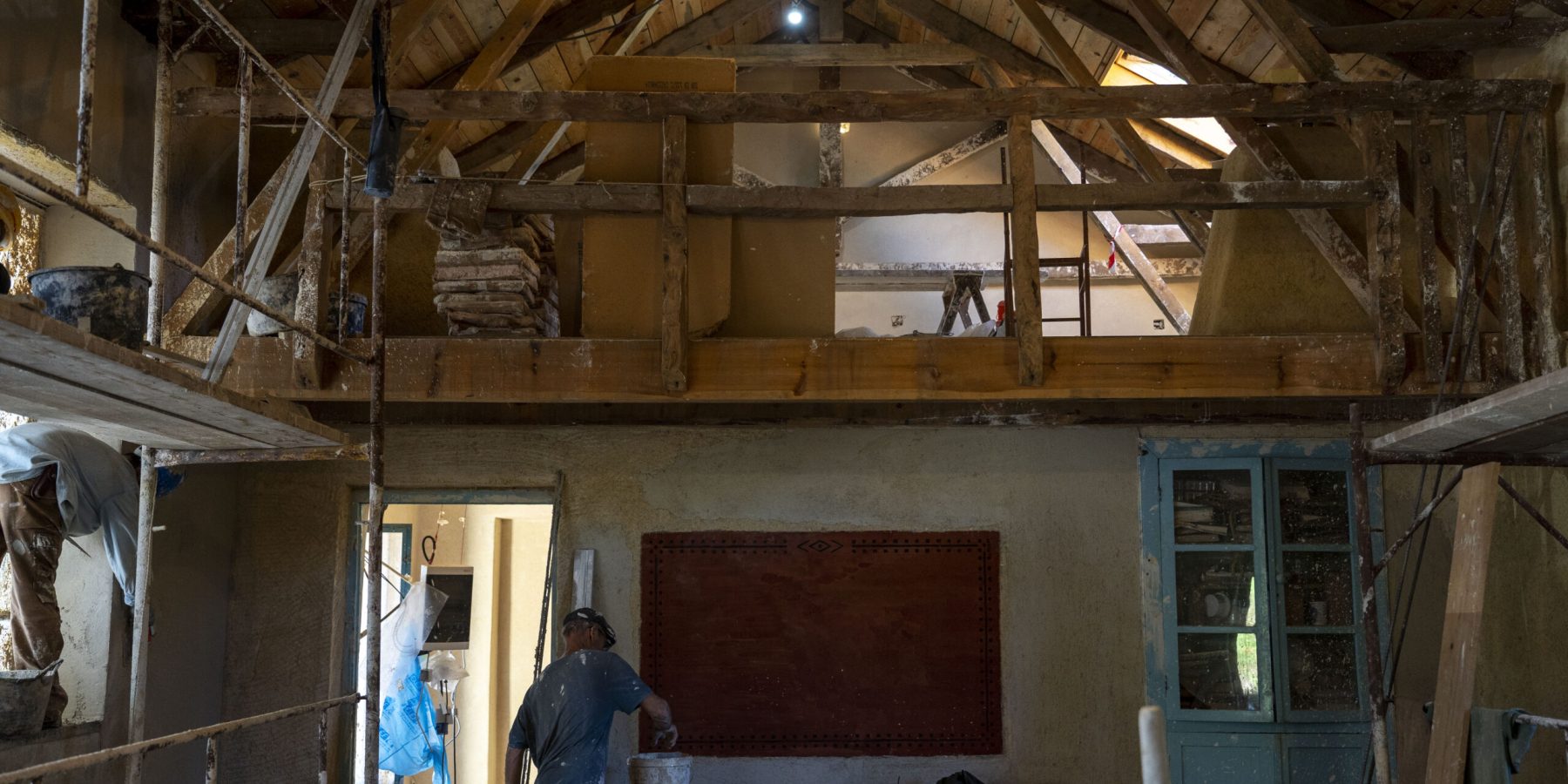
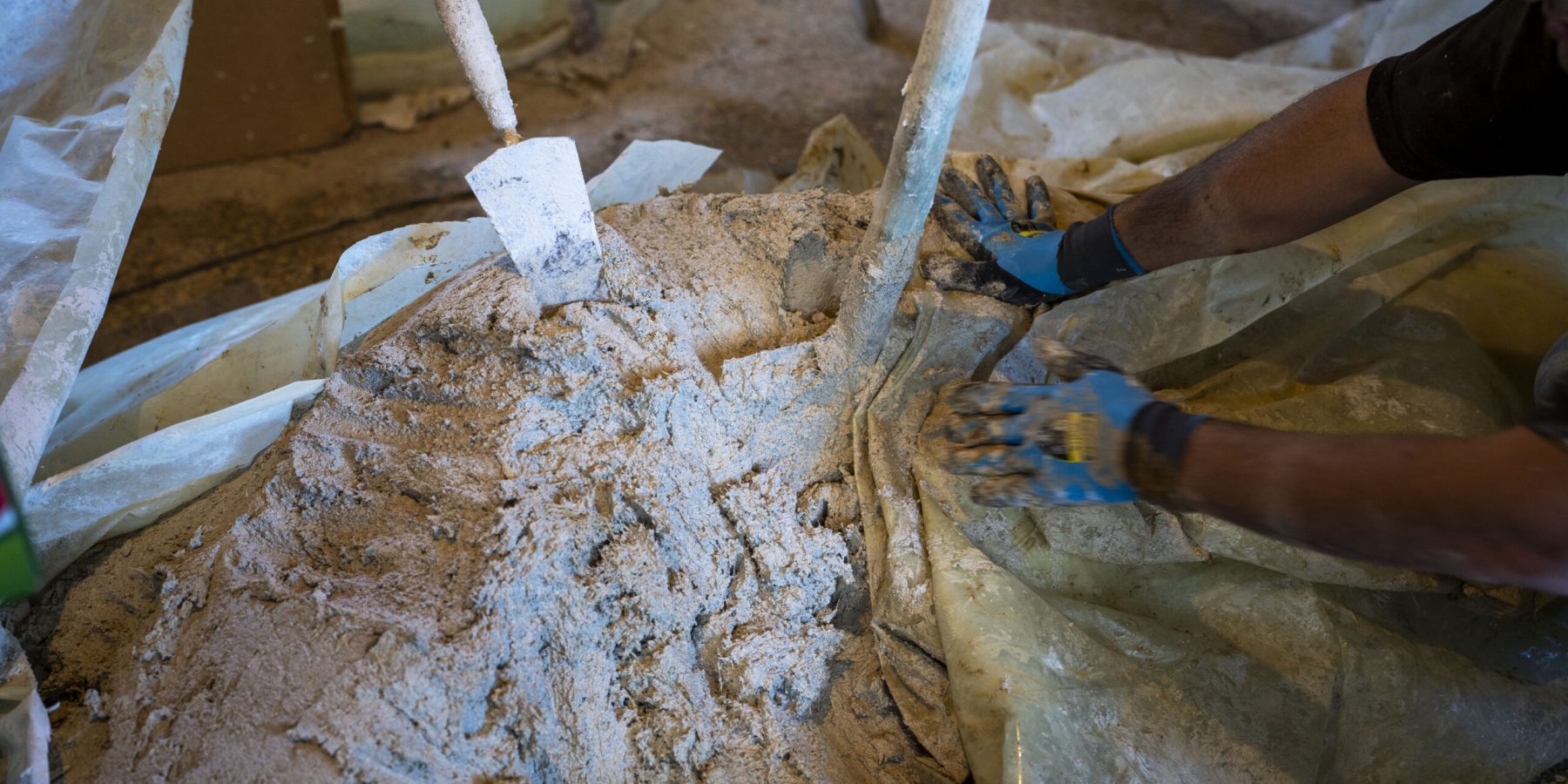
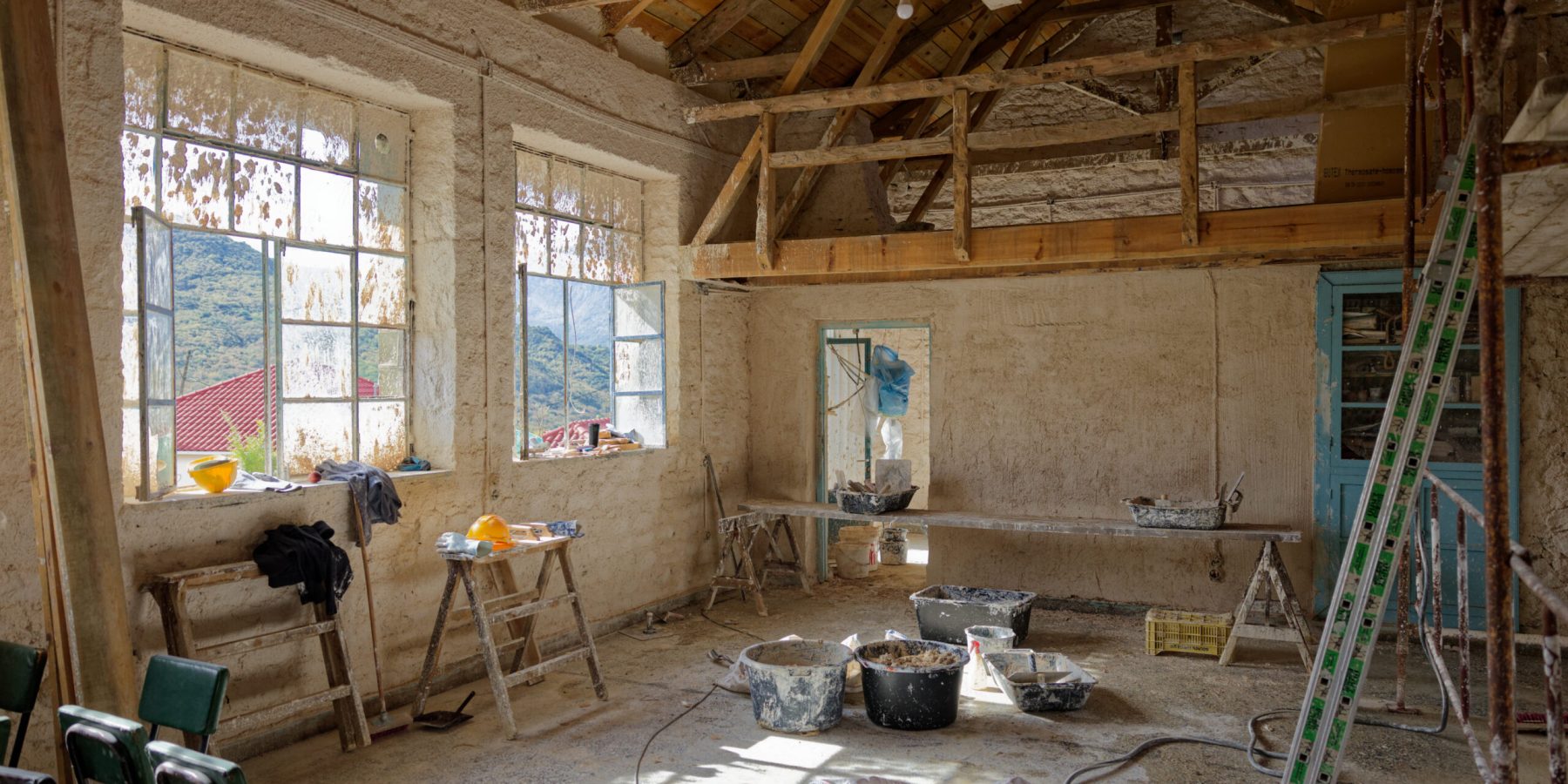
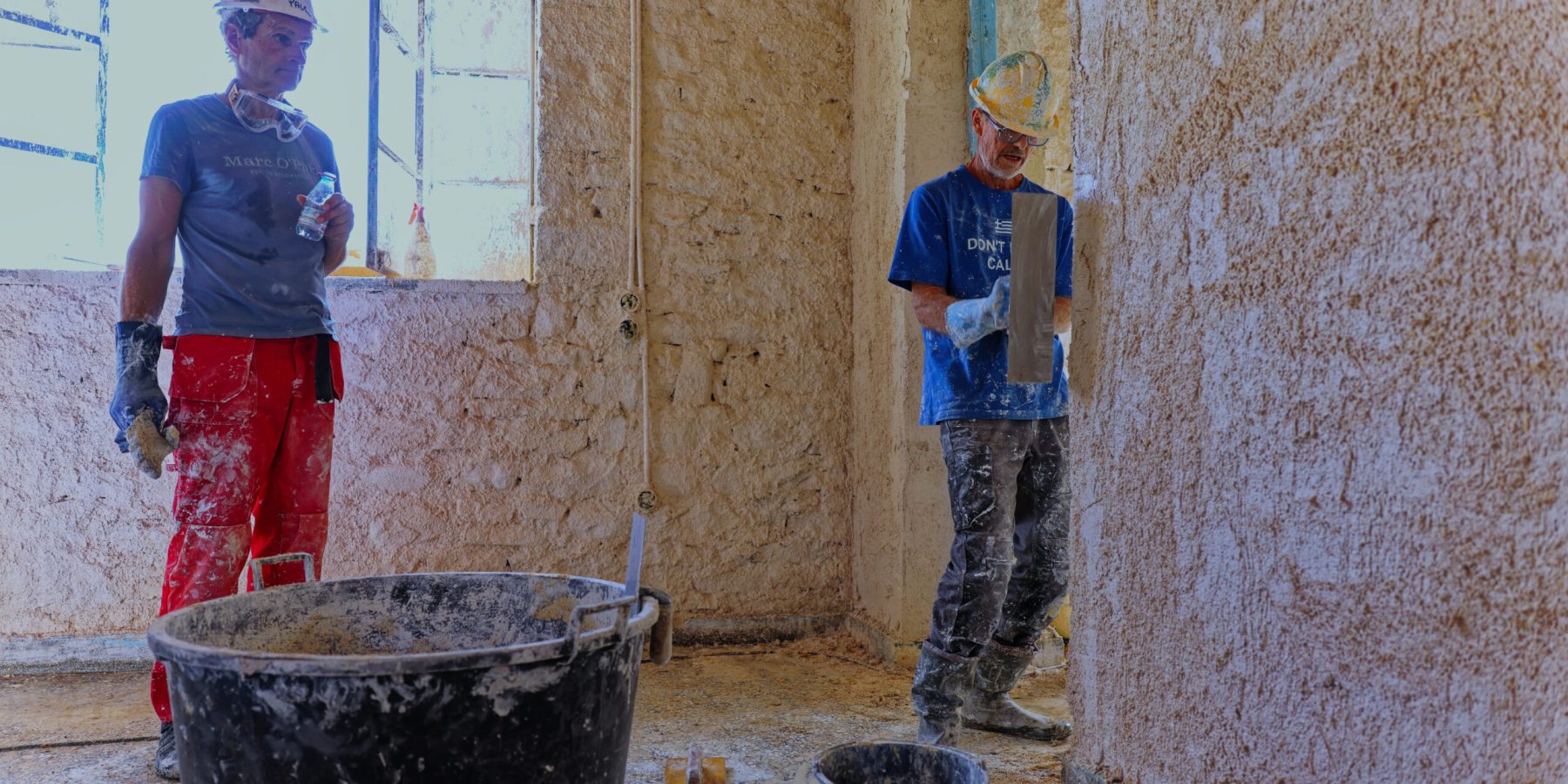
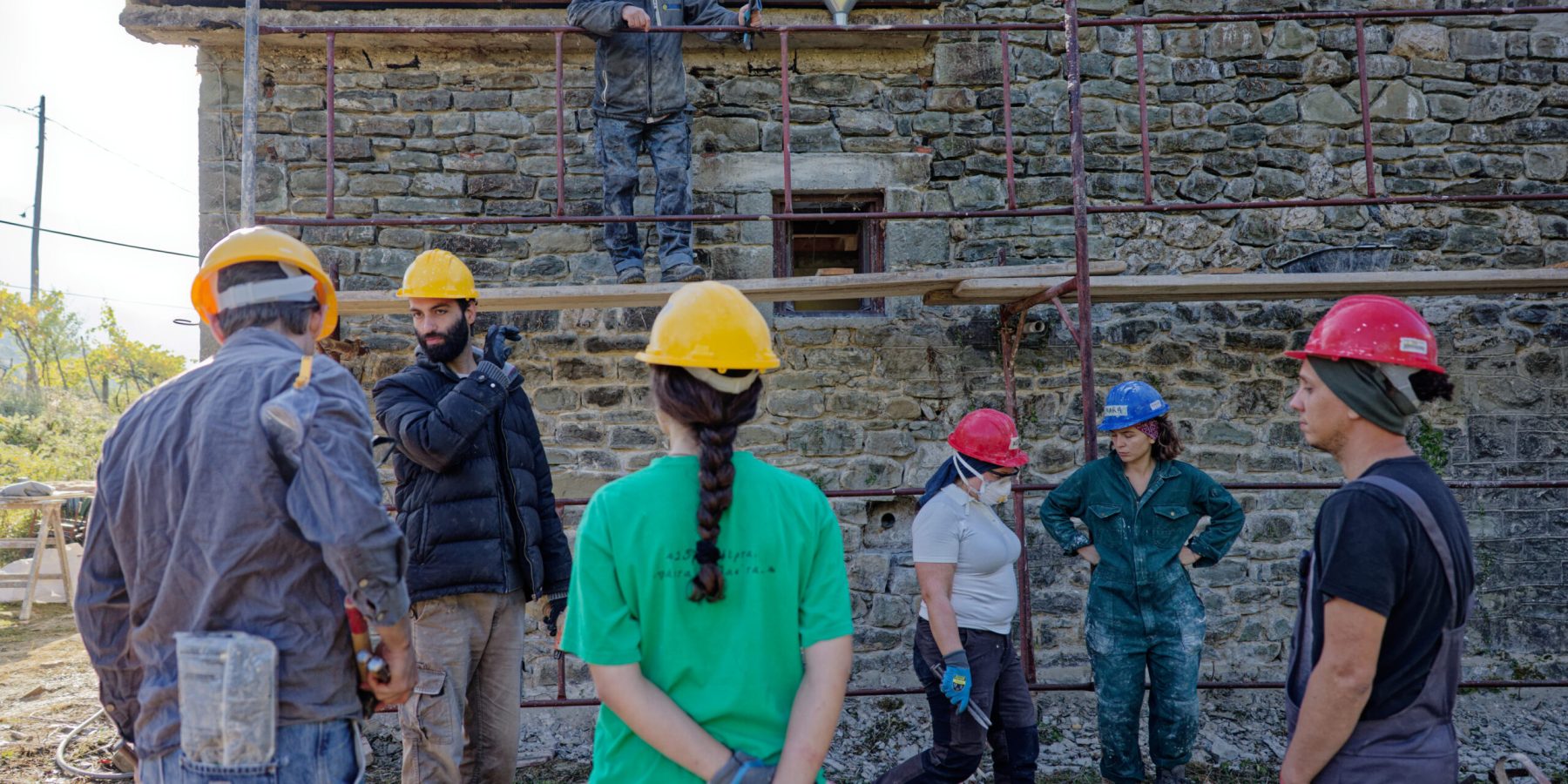
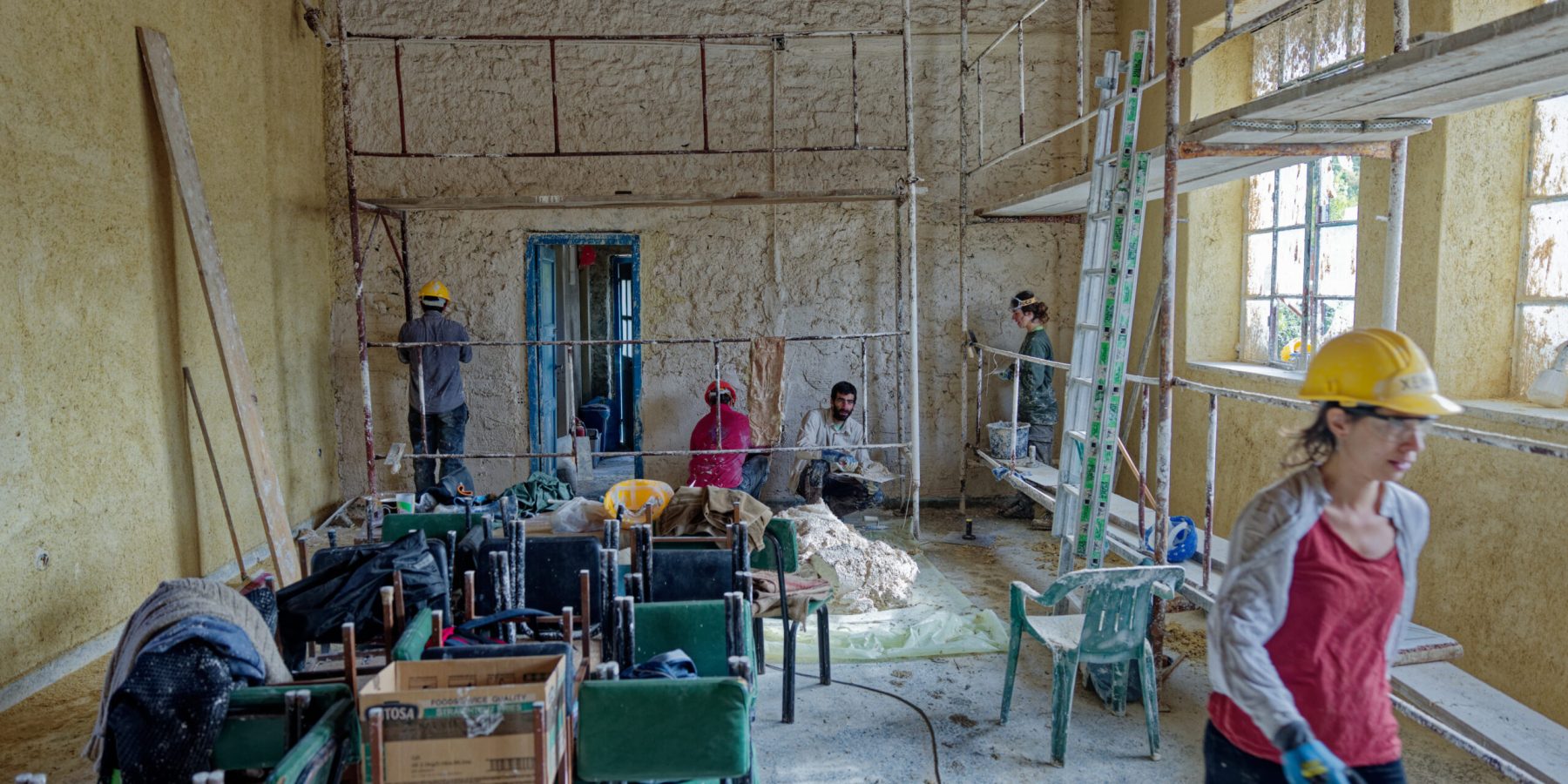
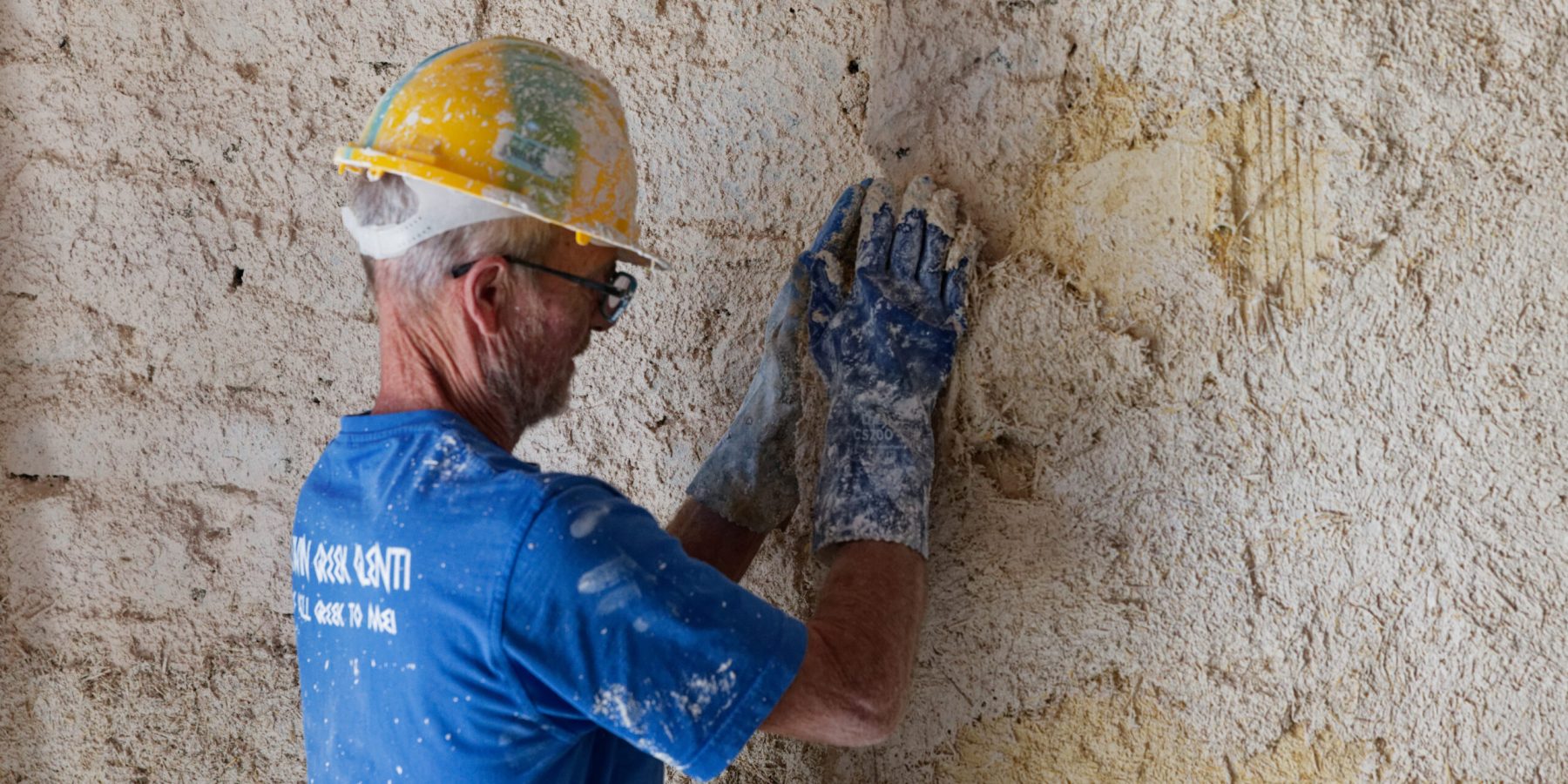
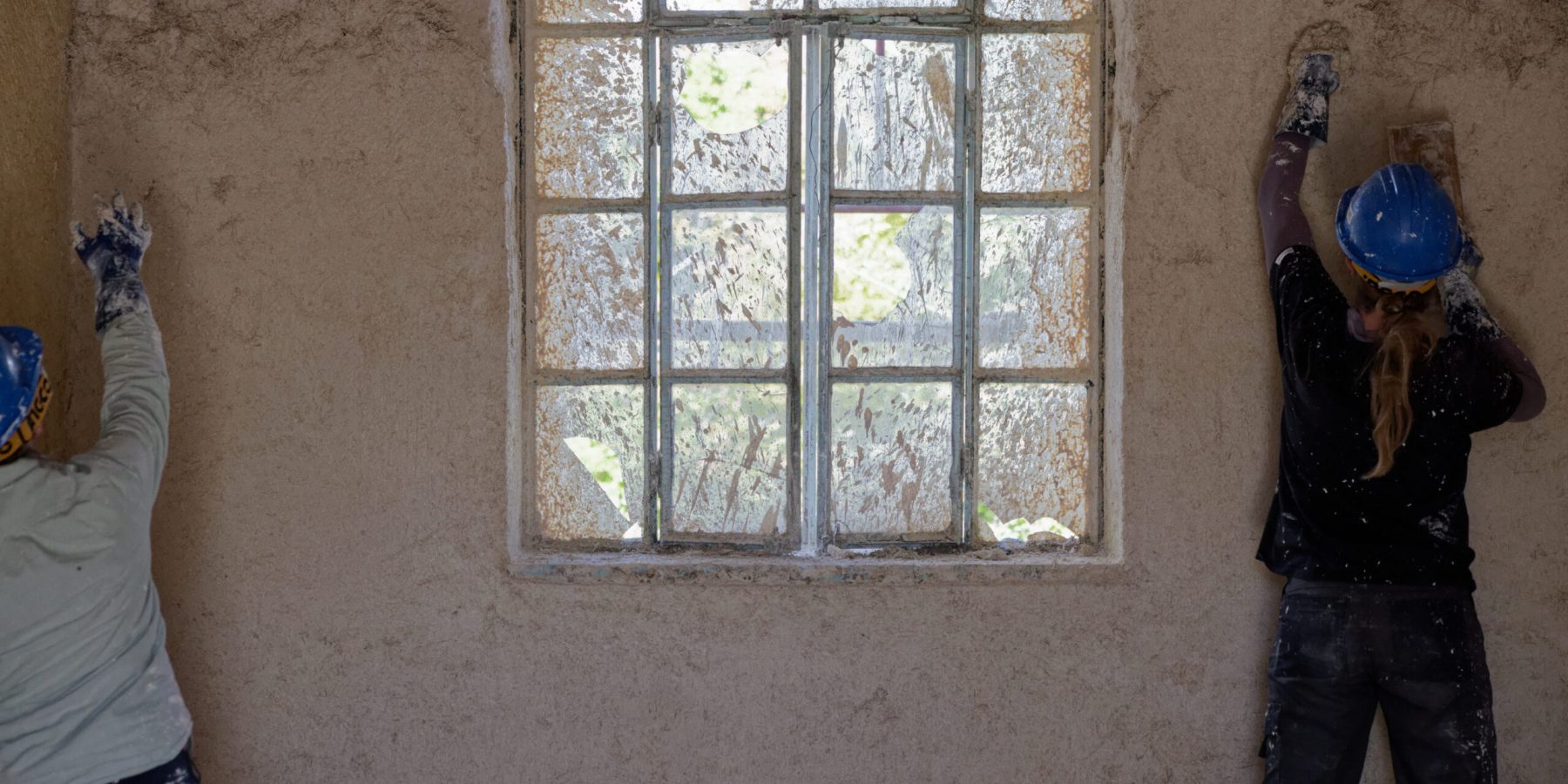
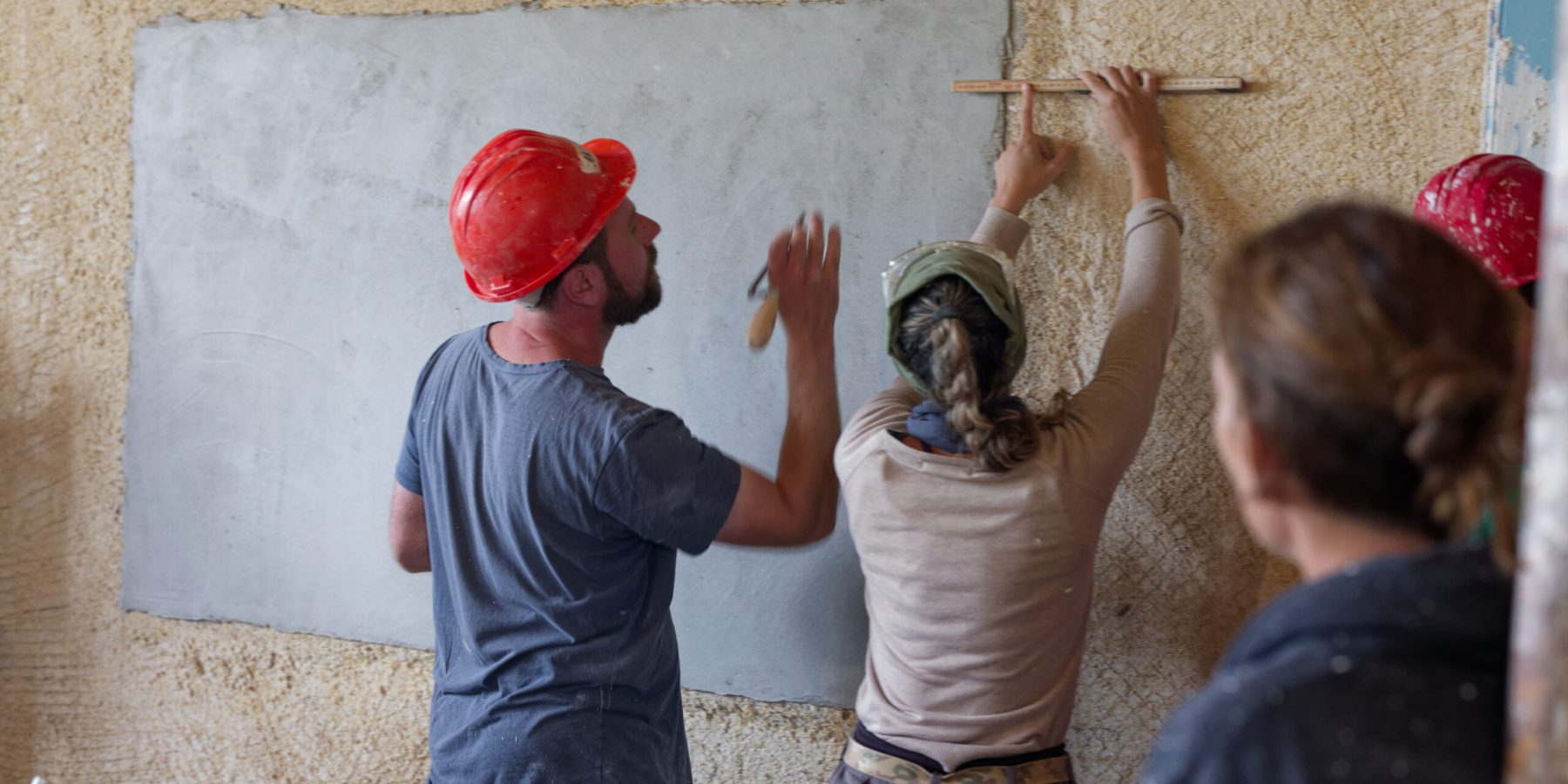
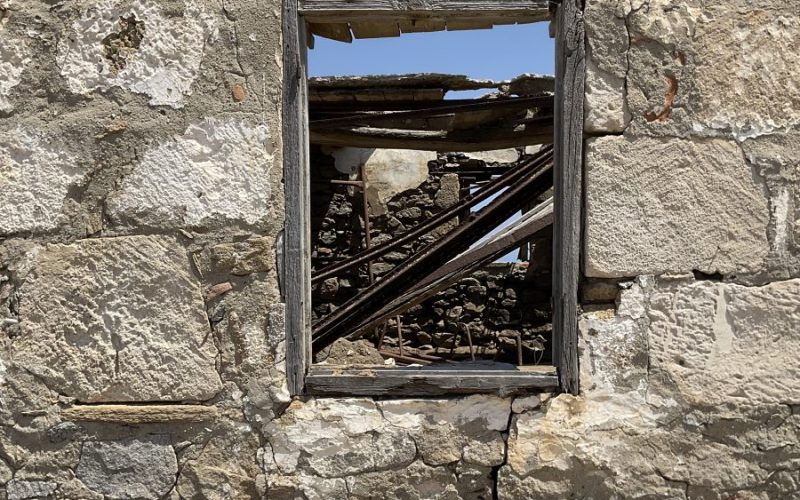
The pointing and plastering works at the Tzoumerka School have been completed, bringing the building to the final stage of its restoration and one step before its new operation as a School for Traditional and Sustainable Building. The works were intensive and carried out within the five-week dual educational program “Keretsi”. The School’s traditional masonry was newly pointed with air-lime mortars, and its interior spaces were plastered with lime-based earthen plasters, recycled aggregates, straw, and clay plaster with straw. Part of the work and the training process involved the removal of old cement renders, understanding local stones, properly preparing different mixes, and applying the successive layers of material.
The apprenticeship program hosted six trainees—craftspeople from Epirus and Serbia—while the workshop welcomed, for two weeks, twenty participants from Greece and abroad who supported the project. Leading the entire team were our two beloved master-trainers, Dominic Taylor and Dimitris Fotis. The team also included intern students working with Boulouki, Orestis Nikolaidis and Dimitra Zachou, as well as our volunteers Marintina Kardarakou, Mats Hanekopf, and James Damon.
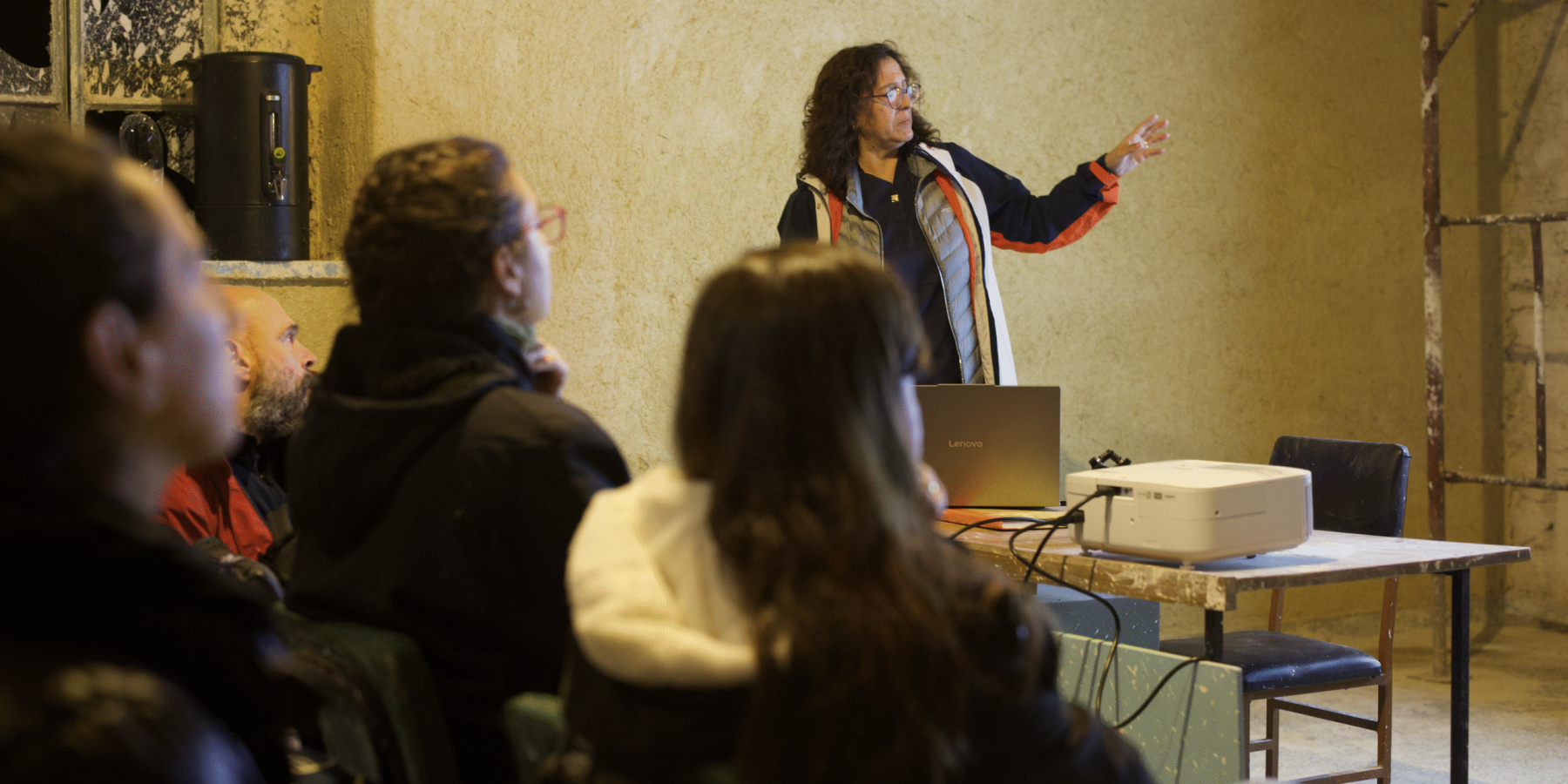
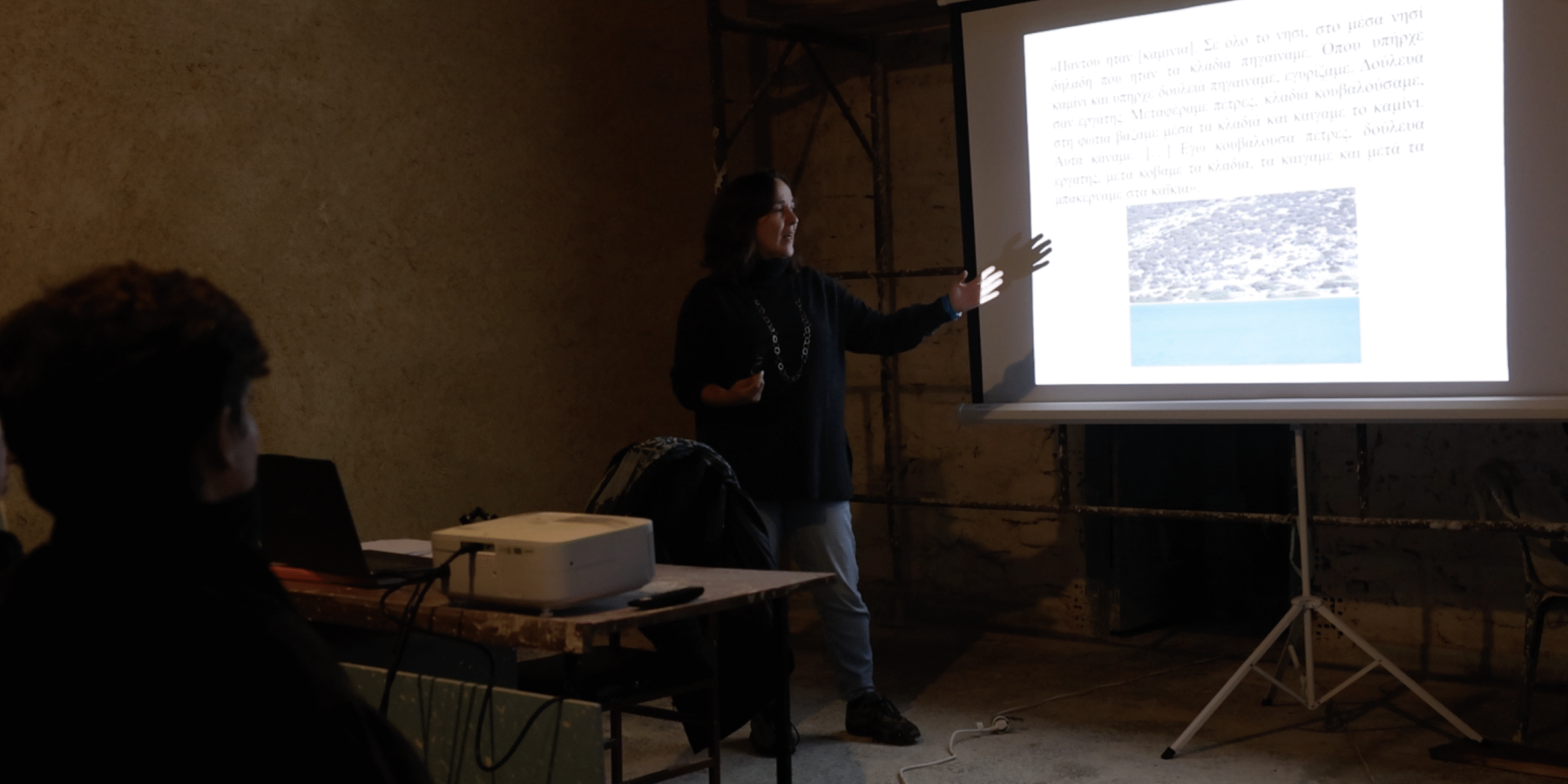
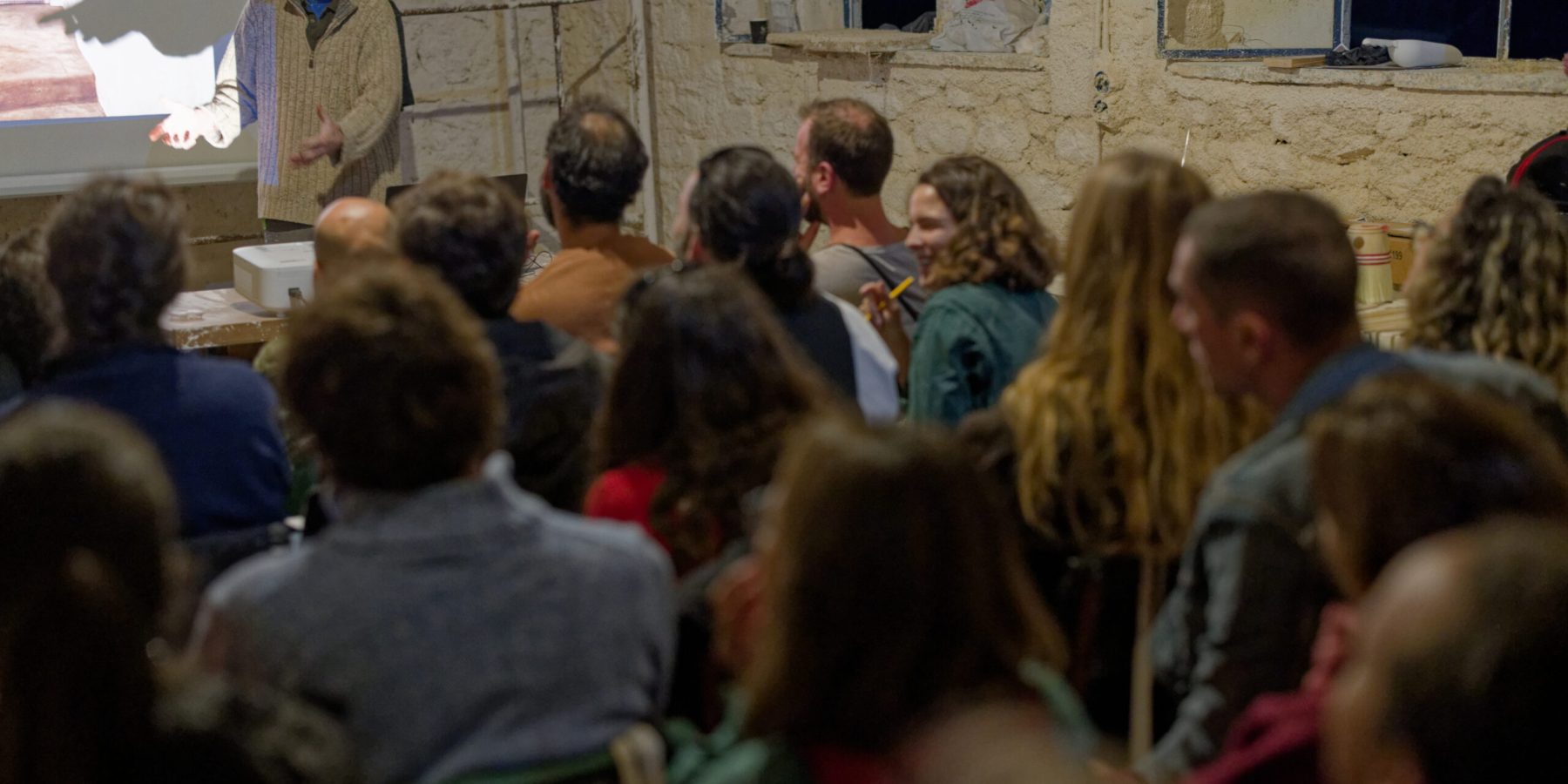
Lectures and Seminars
The afternoons of the “Keretsi” workshop were filled with exceptional lectures and seminars by invited speakers and groups of scientists, craftspeople, and researchers.
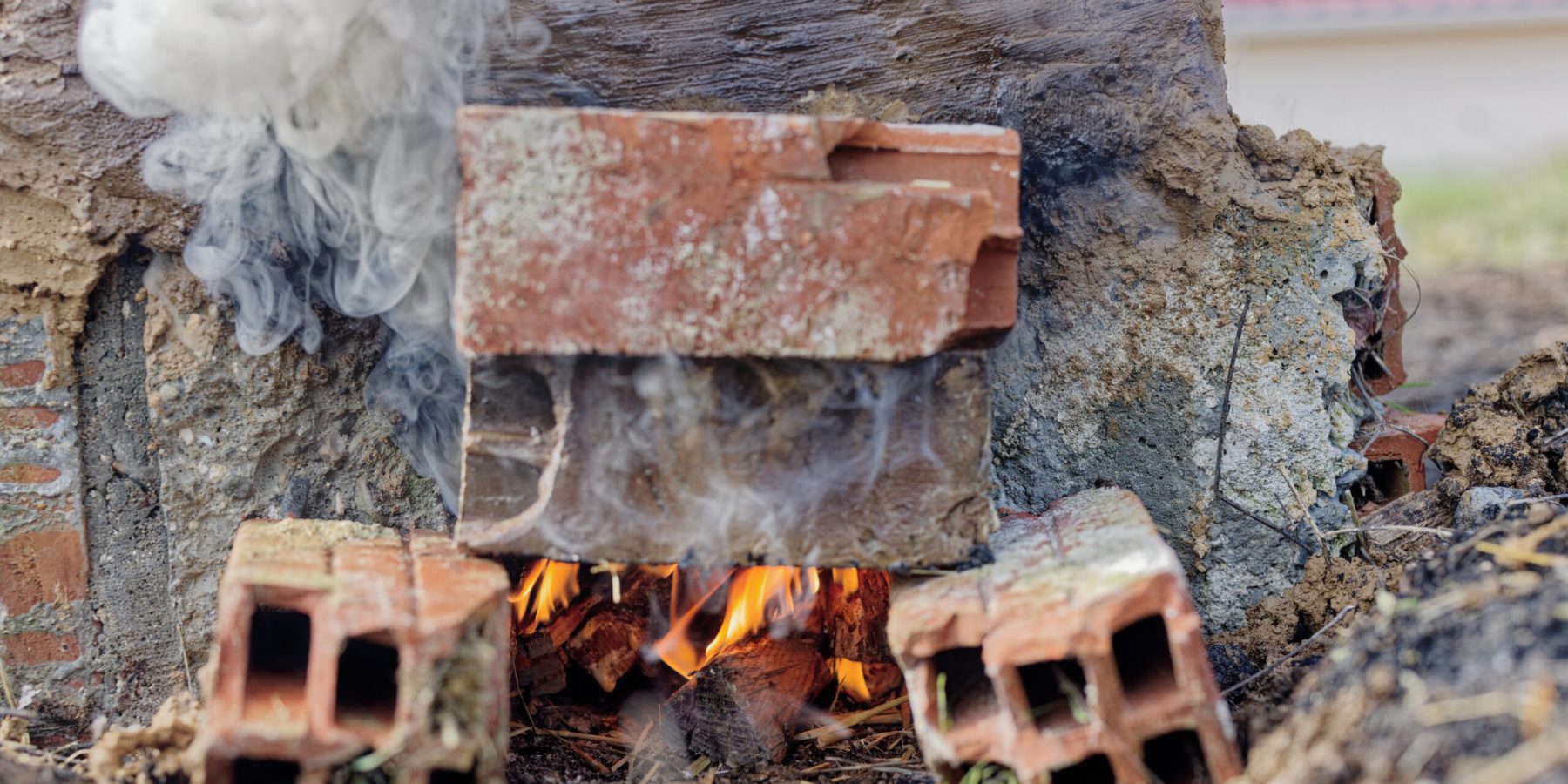
Together with great enthusiasm, we reconstructed a small-scale lime kiln during the Calx Restoration (IR) seminar with Damien Condon and Brenda. We burned local, high-quality limestone and produced our own lime, which we then slaked using a method prevalent in Ireland, dry slaking. We used this lime in the mortars for pointing the southern façade.
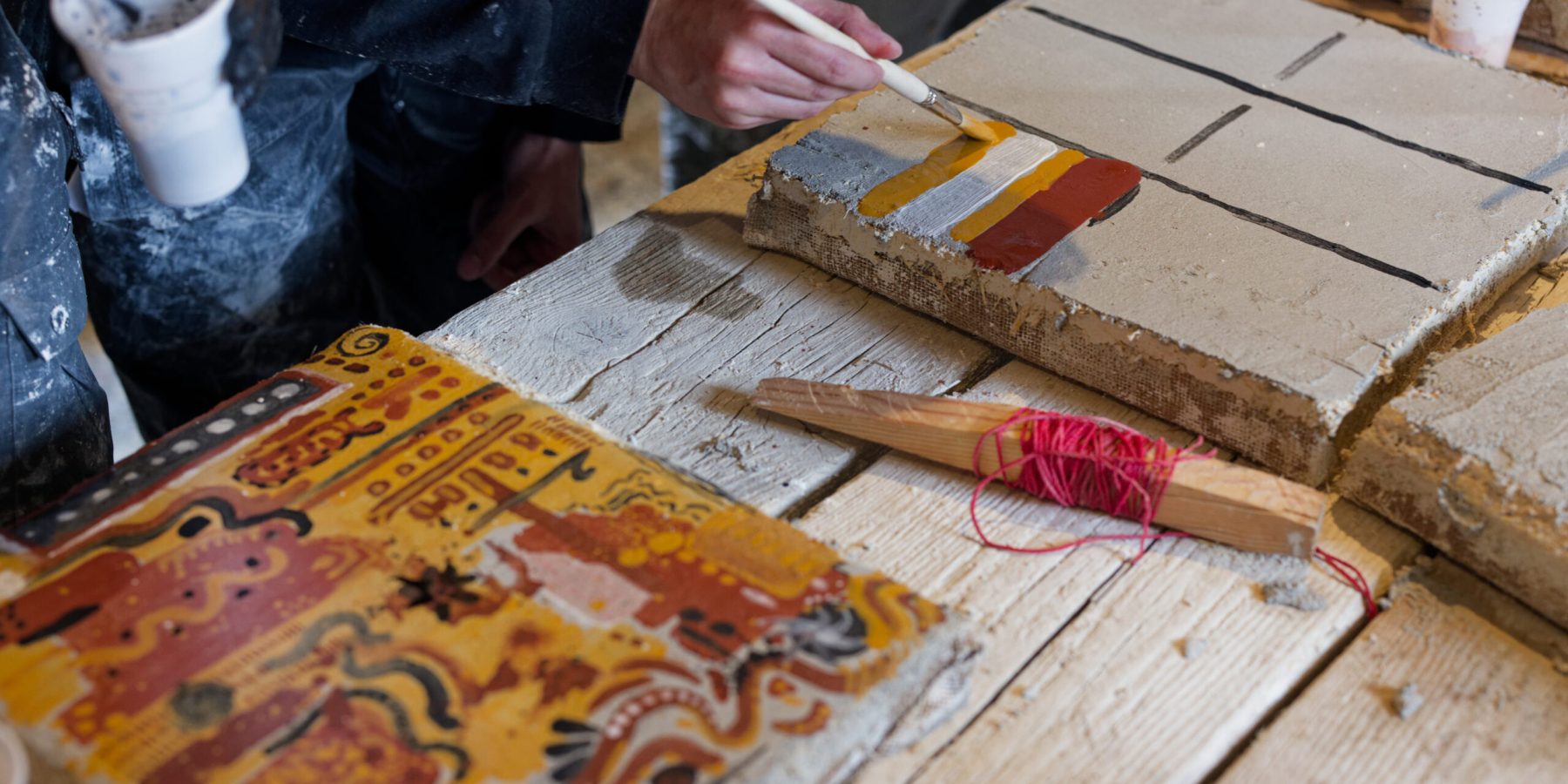
With Maurin Bisig and Delphine Schmidt from Kalkwerk, we led a seminar of experimentation and presentations on decorative lime-based techniques, mineral pigments, and other materials. We created our own fresco in the place of the old blackboard, along with a series of surfaces using different types of plaster.
With Alexis Stefani, Associate Professor in the Department of Conservation of Antiquities and Works of Art at the University of West Attica, we tested pilot consolidation applications to stabilize the carved cornerstones of the façade, as part of seminars on stone decay and protection.
We listened to stories about the lime kilns of Astypalaia from Lida Papastefanaki, Professor of Economic and Social History at the University of Ioannina. We discussed the enduring presence of these practices in island, mountainous, and mainland landscapes.
Together with Maria Stefanidou, Civil Engineer, Geologist, and Director of the Laboratory of Building Materials at AUTH, we discussed the evolution of lime mortar technology and the need to revive the use of air lime.
A highlight of the workshop was its closing lecture by Tasis Papaioannou, Architect and Emeritus Professor at the NTUA School of Architecture, with whom we explored architectural landscapes; the use of lime and clay from antiquity to vernacular and contemporary architecture; the use of color; traditional and modern plaster techniques in urban and rural settings; and knowledge systems at risk of disappearing.
Open Events
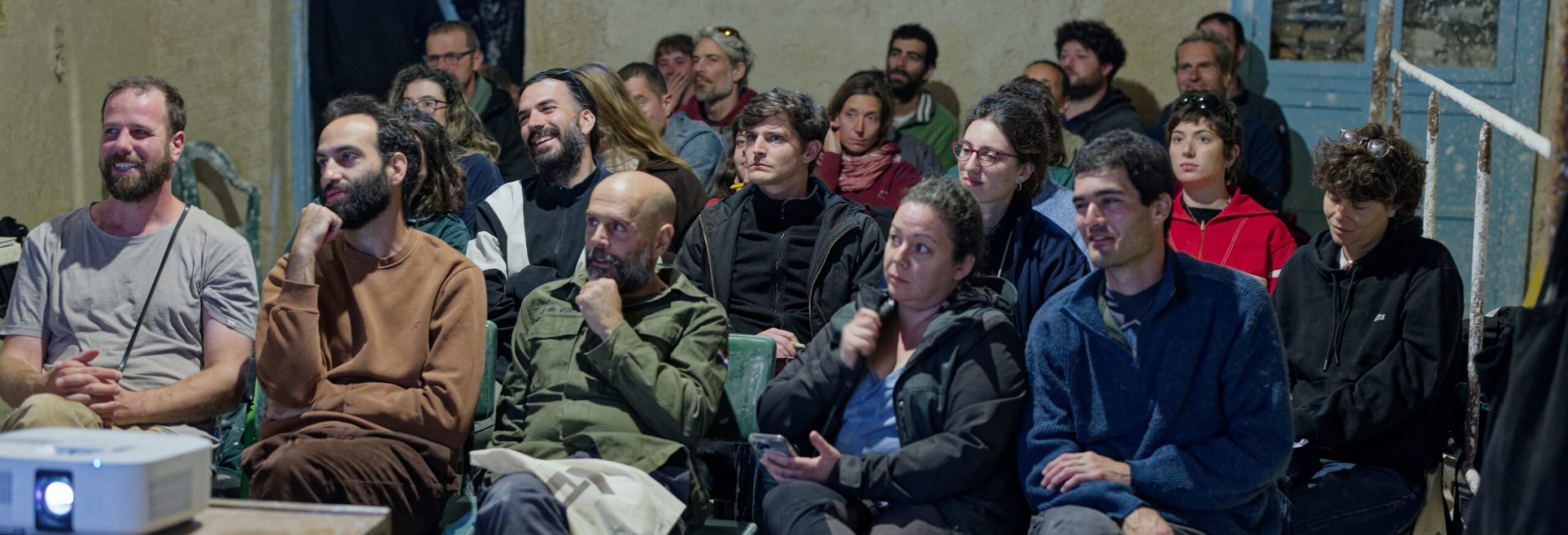
With warm participation from the local community and visitors, the cycle of open activities concluded, featuring talks, discussions, and public gatherings focused on traditional lime knowledge and sustainable building.
In the Roundtable Discussion, coordinated by the Regional Union of Municipalities of Epirus and in scientific collaboration with Boulouki, the issue of producing and using air lime of appropriate quality for the protection of historic structures and for sustainable building was highlighted, as well as the importance of studying local traditions surrounding its historical use. We extend special thanks to Maria Stefanidou, Professor and Director of the Laboratory of Building Materials at AUTH’s Department of Civil Engineering, and to Dimitris Tsarouchas, Civil Engineer and President of the Hellenic Lime Association.
On the final evening of the hands-on workshop, participants and craftspeople received certificates of attendance, and the outcomes of the works and educational process of the two weeks were presented.
Open Construction Site Days
For three days, this year’s construction site at the School opened to the public and to groups with special interests. We welcomed:
The Society for Psychosocial Research and Intervention and the Ioannina Dementia Day Center participated in a moving plastering seminar using the project’s materials and tools. Technical School Arta, Department of Infrastructure Works, and its 40 students, who toured examples of good practices in traditional and sustainable construction while enjoying the Tzoumerka landscape. The Environmental Education Centre of Pramanta and the Primary School of Aneza in Arta (5th and 6th grade), shared stories from their grandparents using lime and learned about limestone during an engaging tour of the Exhibition.
Acknowledgements
For the first time, our project in Tzoumerka is supported simultaneously by European grants and awards, institutional bodies, charitable foundations, private donors, companies, and local authorities, a broader multi-source funding than ever before, reflecting the trust placed in our work. Once again, the local communities of Frasta, Agnanta, and neighboring villages in Tzoumerka supported the implementation of the educational program.
Special thanks to:
The Cultural Association of Frasta for organizing the workshop’s closing celebration.
The businesses at Plaka Bridge:
- Sto Gefyri and Teloneio hotels
- Stou Ziavra café
- Sotos grill house
- Polyzos supermarket
Our local partners for supplying materials, scaffolding, and other construction services. The community and businesses of Agnanta for their hospitality and support. The social cooperative Kardia tis Melissas in Kalloni Tzoumerkon, for the authentic entertainment and hospitality at the conclusion of the apprenticeship.
The Municipalities of Central and Northern Tzoumerka, steadfast partners in an initiative and a development model for this mountain region that is deeply aligned with the principles of the New European Bauhaus, beauty, sustainability, and collective creation.
The program is co-organized by the “Boulouki” Itinerant Workshop on Traditional Building Techniques, Municipality of Central Tzoumerka, Municipality of Northern Tzoumerka, Technical Chamber of Greece – Epirus Department, Epirus Regional Union of Municipalities. With the support of the John S. Latsis Public Benefit Foundation, the Sahinis Family, the A. G. Leventis Foundation, the Technical Chamber of Greece, and the Non-Profit Civil Company AEGEAS. Joint project between the European Union and the Council of Europe, the project “Education and awareness-raising activities aimed at highlighting the value of traditional building materials based on aerial lime” is supported by the Green Fund’s funding program “Natural Environment and Climate Neutrality – Outreach Actions 2025” (Budget: €10,000. Funding: Green Fund, Beneficiaries: Regional Union of Municipalities of Epirus (PED Epirus) together with the NPO Boulouki. A scholarship for one position in the Apprenticeship Program, sponsored by Dalkafouki Oikos. This initiative is carried out under the auspices and with the financial support of the Ministry of Culture.
This project was produced with the financial support of the European Union and the Council of Europe. Its contents are the sole responsibility of the author(s). The views expressed herein can in no way be taken to reflect the official opinion of either the European Union or the Council of Europe.