Strategic NGOs Meeting for PONT
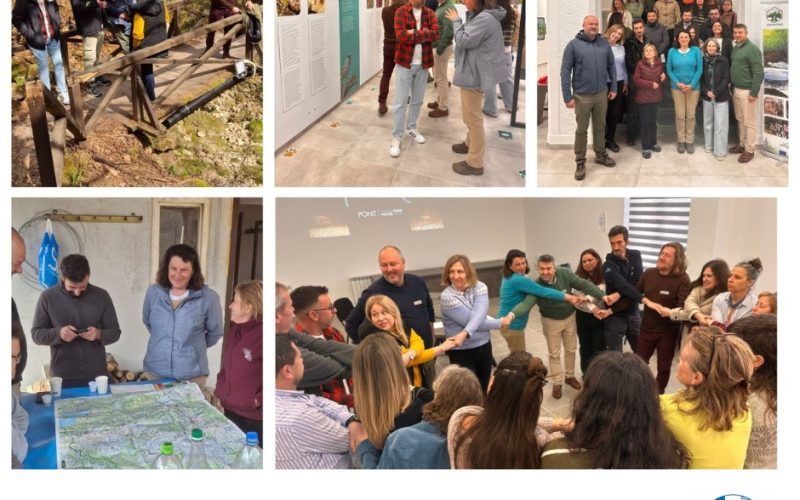
Boulouki participated as an implementing partner at the second strategic PONT NGOs Meeting, held on 26-27 March 2026 in Vevčani, North Macedonia. The meeting brought together implementing partners from across Greece, North Macedonia, and Albania. It marked a decisive shift from ideas to action, focusing on turning the PONT Strategy into a functioning monitoring system.
From Strategy to Action
At the heart of the meeting was a shared priority: turning the PONT Connect Strategy into a functioning monitoring system. While individual projects already track their progress, the lack of a unified framework has made it difficult to demonstrate the bigger picture the combined impact on ecological connectivity and human well-being.
Participants aligned around the need for a common approach that will:
- Capture cumulative impact across nine active grants in three countries
- Strengthen learning and enable adaptive management
- Build a strong evidence base for scaling and future investment
- Shift from isolated actions to a coordinated, landscape-level approach
This marks a critical evolution from reporting on individual projects to demonstrating collective impact. The signing of four new grants (two in Albania and two in North Macedonia), financed through the French Facility for Global Environment (FFEM), is crucial for the envisaged impact on a landscape level.
Rethinking Connectivity Conservation
One message stood out clearly: connectivity conservation is not the same as traditional protected area management. Much of this work happens in landscapes without formal protection or governance structures, where success depends less on designation and more on people.
In this context, NGOs are not just implementers they are facilitators of change. They identify ecological values, threats, and opportunities while simultaneously building local ownership and long-term stewardship by local stakeholders.
The takeaway was clear: avoid “paper parks.” Real conservation impact depends on trust, engagement, and shared responsibility. In many cases, co-management and community-led approaches are not just effective they are essential. This requires constant active communication and stakeholder engagement, highlighted during a follow-up session with the PeaceNexus Foundation.